10 Living Room Ideas for Apartments
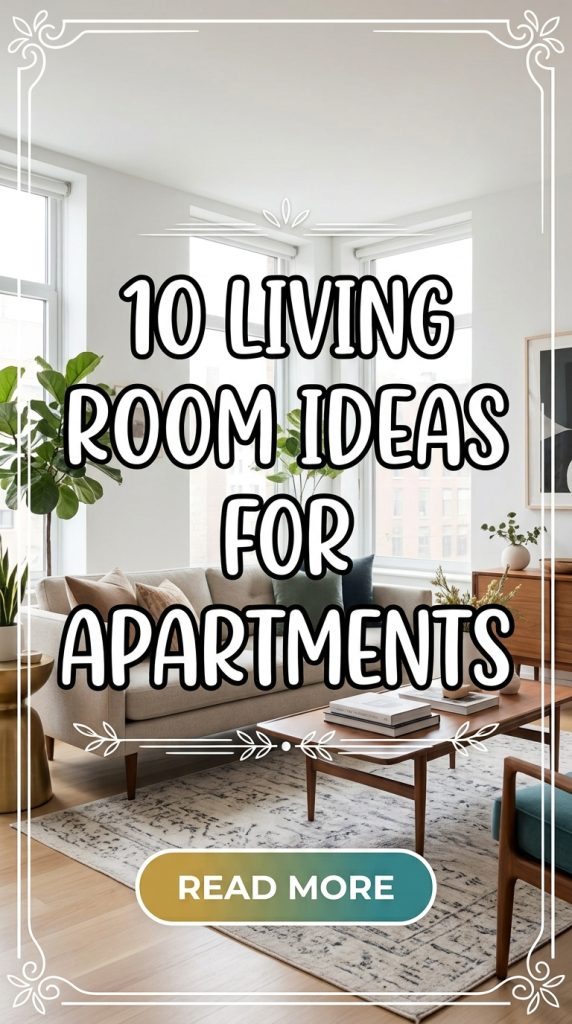
Creating a stylish and functional apartment living room requires thoughtful planning, especially when working with limited space. A well-designed living room serves as a comfortable place to relax, entertain guests, and enjoy everyday activities without feeling crowded. Modern Pinterest ideas often focus on combining beauty with practicality, making even the smallest apartment feel open, organized, and welcoming. This guide explores ten creative ideas that help transform an ordinary apartment living room into a space that reflects modern design while remaining highly functional. Readers will learn practical DIY techniques, furniture arrangement methods, decoration strategies, and organization solutions suitable for beginners. Every idea emphasizes efficient use of available space, careful planning, and attractive styling that can be adapted to different apartment sizes and layouts while maintaining an aesthetic appearance and long-term usability.
Why Apartment Living Room Ideas Are Trending
Apartment living room inspiration continues to gain popularity because more people are looking for creative ways to maximize compact homes without sacrificing comfort or style. Pinterest ideas showcase realistic layouts, beginner friendly DIY improvements, and affordable decorating methods that work in apartments of many sizes. Modern design trends also encourage minimalist style, clean organization, and multifunctional furniture that supports everyday living. These creative ideas appeal to homeowners and renters alike because many projects require only simple materials and basic tools. Small decorative changes, thoughtful furniture placement, and organized storage can dramatically improve how a room looks and functions. These practical solutions are accessible to beginners and allow gradual improvements over time, making apartment decorating an easy project that delivers lasting visual appeal and greater everyday convenience.
Materials and Preparation
Before beginning any apartment living room makeover, prepare a clear plan that matches the available space and daily needs. Gather basic materials such as measuring tape, storage baskets, decorative cushions, throw blankets, picture frames, indoor plants, shelving, lighting accessories, wall art, rugs, and organizational containers. Depending on the chosen DIY tutorial, additional materials may include paint, adhesive hooks, floating shelves, or simple woodworking supplies. Start by measuring the room carefully and identifying areas that receive natural light, experience heavy foot traffic, or require additional storage. Planning furniture placement before purchasing new pieces helps prevent overcrowding. Creating a simple floor sketch also allows better visualization of movement throughout the room while ensuring every decorative element contributes to organization, comfort, and a balanced aesthetic.
Idea 1: Create a Bright Minimalist Seating Area
How to Create
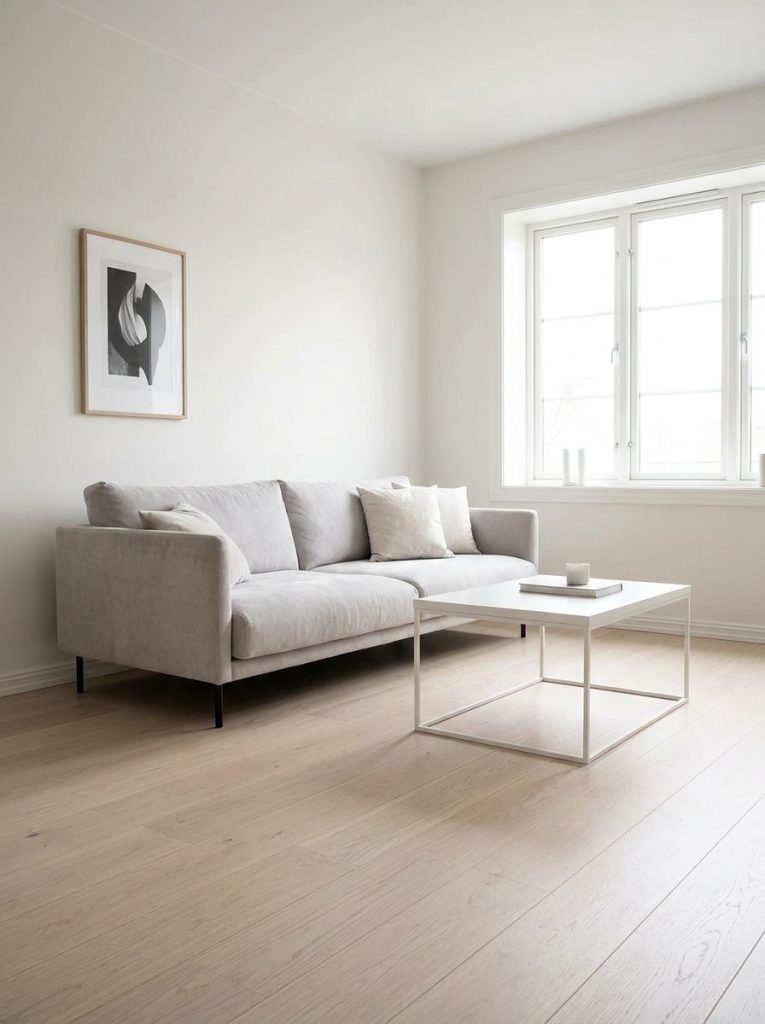
A minimalist seating arrangement creates an open atmosphere while maximizing valuable floor space. Begin by selecting a comfortable sofa that fits the apartment dimensions without dominating the room. Position it against the longest wall to leave clear walking paths throughout the living area. Add one compact accent chair if additional seating is needed while avoiding unnecessary furniture that reduces openness. Choose a neutral color palette for large furniture pieces and introduce texture through cushions, woven throws, and simple decorative accents. Place a small coffee table with hidden storage in the center to improve functionality while reducing clutter. A large area rug helps define the seating zone and visually connects all furniture pieces. Finish the design with simple wall decoration, soft lighting, and carefully selected handmade decorative objects that maintain a clean, modern design without overwhelming the apartment’s limited space.
Idea 2: Design a Functional Reading Corner
Step-by-Step Guide
A dedicated reading corner adds both comfort and personality to an apartment living room while making excellent use of an unused corner. Start with a compact armchair positioned near a window whenever possible to benefit from natural light during the day. Add a slim side table that provides enough space for books, beverages, or decorative accessories. Install a floor lamp with adjustable lighting to support evening reading while enhancing the room’s overall atmosphere. Include a small bookshelf or floating shelves to organize favorite books vertically without occupying valuable floor space. A soft throw blanket and decorative pillow increase comfort while complementing the existing color scheme. Finish the corner with a small indoor plant and simple artwork to create visual balance. This beginner friendly creative project combines relaxation, organization, and aesthetic styling in a highly practical apartment solution.

Idea 3: Build a Gallery Wall with Personal Style
How to Make
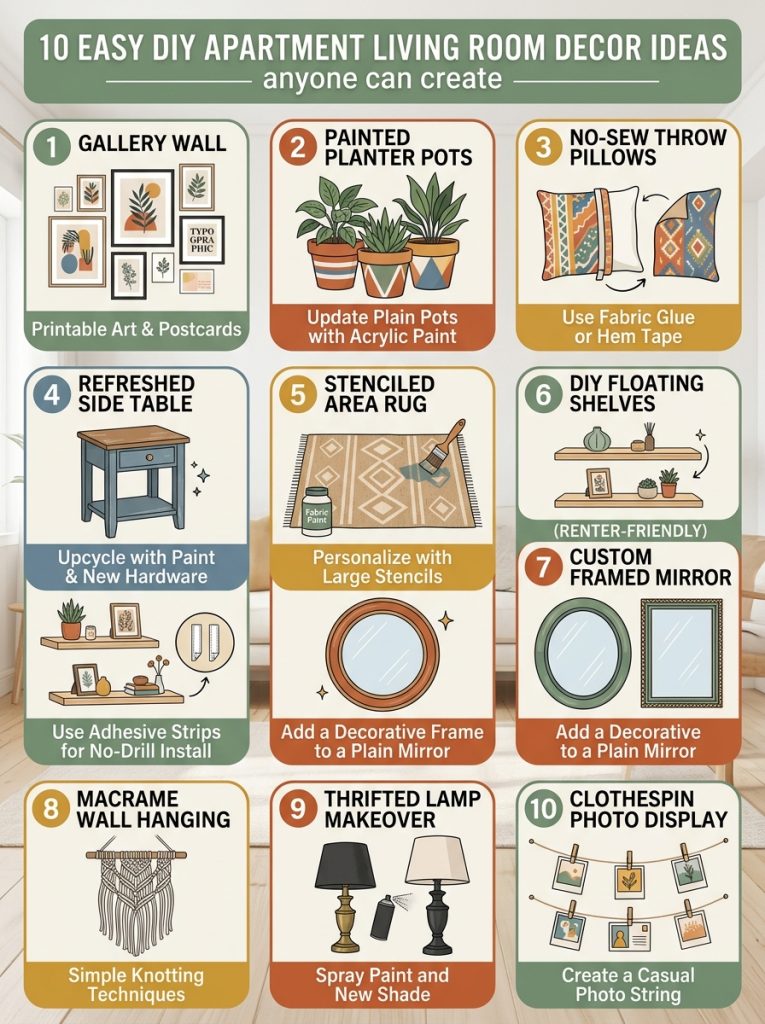
A gallery wall introduces personality without requiring additional furniture, making it ideal for apartment living rooms. Begin by selecting a consistent theme such as botanical prints, abstract artwork, travel photography, or black-and-white illustrations. Arrange the frames on the floor before installation to experiment with spacing and overall composition. Maintain equal distances between each frame to create a polished appearance. Lightweight frames are particularly suitable for apartments because they can often be installed using removable hanging solutions when permanent wall changes are limited. Combine different frame sizes while maintaining a unified color palette to create visual interest. Position the gallery above the sofa or along an empty feature wall where it naturally draws attention. Incorporating handmade artwork or DIY prints adds originality while keeping decoration costs manageable. The finished display provides lasting inspiration and strengthens the room’s overall aesthetic.

Idea 4: Maximize Vertical Storage with Floating Shelves
Setup Method
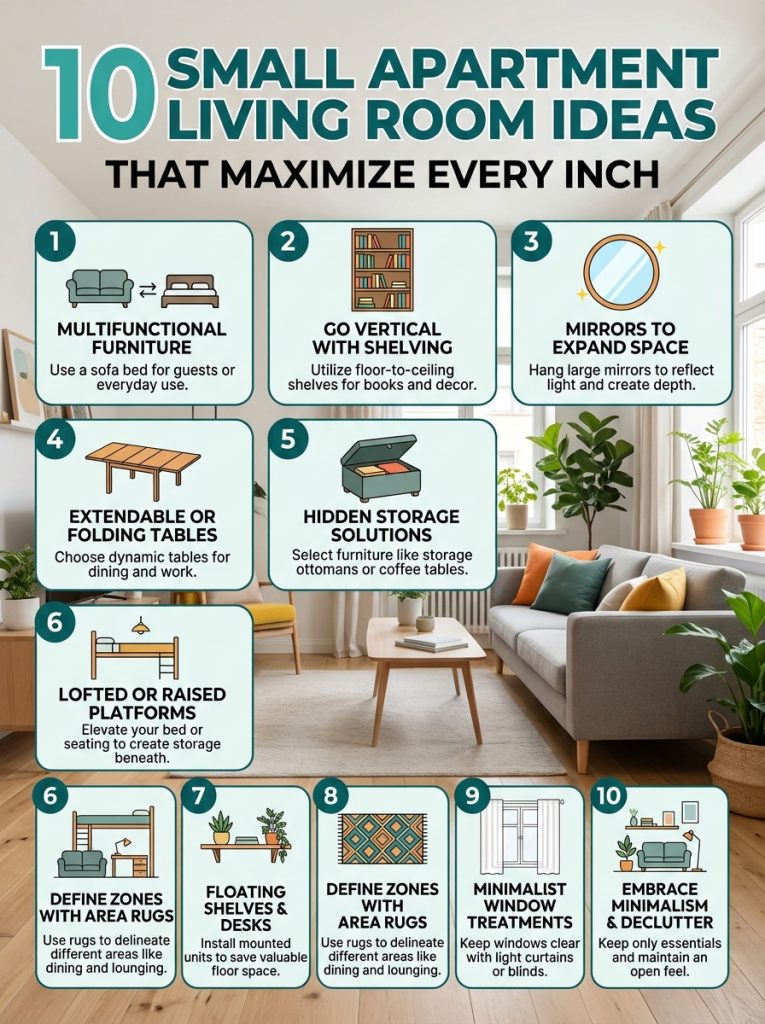
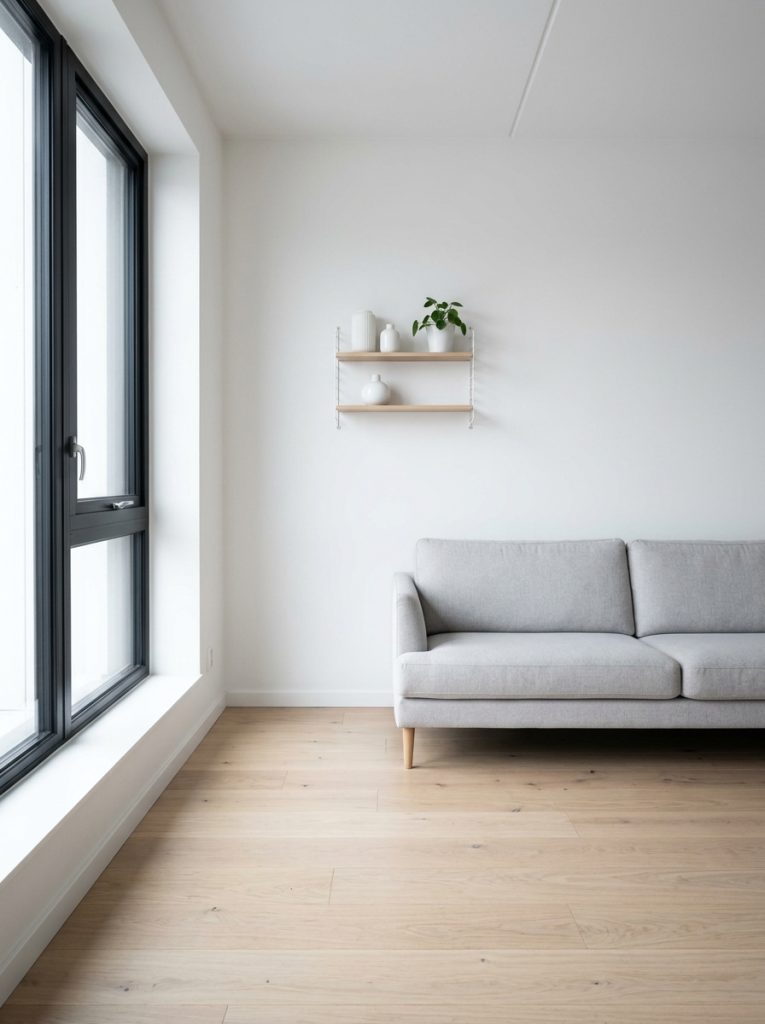
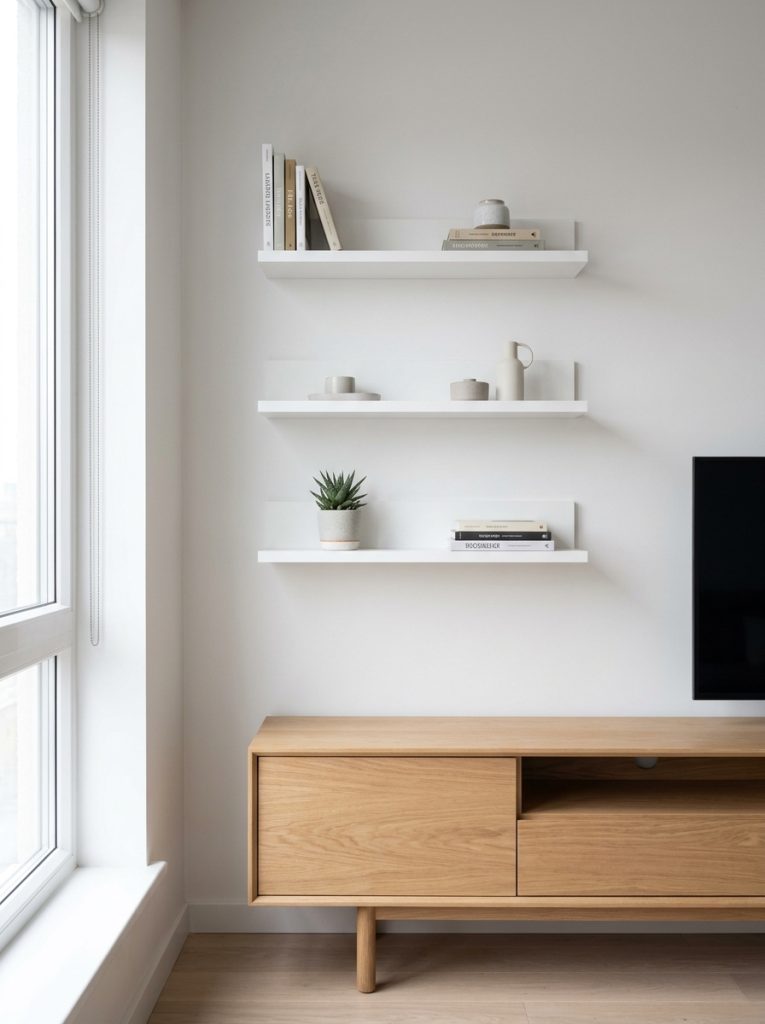
Vertical storage helps apartments remain organized while preserving valuable floor area for everyday activities. Install floating shelves above furniture or along unused walls to display books, decorative baskets, framed photographs, candles, and small indoor plants. Before installation, measure carefully to maintain balanced spacing and ensure each shelf supports its intended weight. Store frequently used items within easy reach while reserving higher shelves for decorative pieces that require less frequent access. Mixing practical storage with attractive decoration prevents the shelves from appearing overcrowded. Decorative boxes and woven baskets conceal smaller household items while contributing to the room’s overall design. A symmetrical arrangement creates a minimalist style, while an asymmetrical display introduces more creative ideas without sacrificing organization. This easy project improves storage capacity while enhancing visual interest throughout the apartment living room.

Idea 5: Add Warmth with Layered Textures
Execution Process
Layering textures creates a welcoming apartment living room that feels comfortable without requiring major renovations. Begin with a soft area rug that anchors the seating arrangement and introduces warmth beneath furniture. Add cushions made from different fabrics to create subtle contrast while maintaining a coordinated color palette. Place a knitted throw blanket across the sofa for both decoration and everyday comfort. Include woven baskets, wooden accents, ceramic accessories, and linen curtains to introduce additional natural textures that complement modern design. Combining smooth, soft, and woven surfaces prevents the room from appearing flat while maintaining visual harmony. Keep decorative accessories carefully edited to avoid clutter, allowing each element to contribute meaningfully to the overall design. Layered textures create depth, improve comfort, and support an inviting atmosphere suitable for both everyday living and entertaining guests.

Idea 6: Introduce Indoor Plants for Natural Balance
How to Create
Indoor plants bring freshness, color, and natural balance to apartment living rooms while requiring relatively simple maintenance. Choose plant varieties appropriate for the room’s lighting conditions and available space. Position larger plants in empty corners to soften sharp architectural lines without restricting movement. Smaller plants can decorate shelves, side tables, or window sills while adding subtle visual interest throughout the room. Coordinated planters help maintain consistency within the overall decoration style. Hanging planters provide additional greenery without using valuable floor space, making them particularly effective in smaller apartments. Grouping plants of different heights creates an attractive layered display while preserving a clean aesthetic. Regular watering, dusting, and occasional pruning help maintain healthy plants that continue enhancing the living environment. This beginner friendly project combines decoration with improved atmosphere using simple materials and thoughtful planning.
Idea 7: Organize with Hidden Storage Furniture
Step-by-Step Guide
Furniture that includes hidden storage allows apartment living rooms to remain organized while reducing visible clutter. Select coffee tables with internal compartments, ottomans that open for storage, or television stands containing cabinets and drawers. Before purchasing, identify the items requiring storage, such as blankets, magazines, games, remote controls, or seasonal decorations. Assign dedicated storage locations for each category to simplify everyday organization. Decorative baskets placed beneath side tables provide additional concealed storage while contributing to the room’s overall aesthetic. Maintaining consistent organization habits prevents clutter from accumulating over time. Hidden storage also supports minimalist style by reducing the number of visible household items, allowing decorative features to become the primary visual focus. This practical solution improves both functionality and appearance without increasing the apartment’s overall furniture footprint.
Idea 8: Use Mirrors to Expand the Space Visually
How to Make
Mirrors create the illusion of larger interiors by reflecting both natural and artificial light throughout the apartment living room. Position a large mirror opposite a window whenever possible to maximize brightness and make the room appear more spacious. Alternatively, install several smaller mirrors as part of a decorative arrangement that complements surrounding artwork. Choose frame styles that match the existing furniture to maintain consistency across the room. Avoid placing mirrors where they reflect clutter or busy storage areas, as this can visually increase disorder. Instead, reflect attractive focal points such as indoor plants, decorative lighting, or clean wall features. Combining mirrors with light-colored walls and simple furniture strengthens the feeling of openness while supporting modern design principles. This easy project requires minimal materials yet delivers significant visual improvement.
Idea 9: Create a Flexible Multi-Purpose Living Room
Setup Method
Many apartment living rooms serve several functions, including relaxing, working, dining, and entertaining. Designing flexible spaces begins with clearly identifying each activity and assigning dedicated zones without constructing physical barriers. Use rugs, lighting, or furniture placement to define different areas while maintaining an open floor plan. Select compact furniture that can easily move when additional space is needed. Foldable tables, nesting side tables, and lightweight chairs increase versatility without permanently occupying valuable floor space. Store work materials in decorative boxes that can be quickly hidden after use to preserve a relaxing atmosphere. Coordinated decoration throughout every zone creates visual continuity while preventing the room from feeling fragmented. This practical organization strategy allows one apartment living room to support multiple daily routines efficiently.

Idea 10: Finish with Coordinated Decorative Details
Execution Process
Small decorative details complete an apartment living room by creating visual harmony between furniture, colors, and accessories. Begin by selecting one consistent color palette that appears throughout cushions, artwork, rugs, curtains, and decorative objects. Introduce seasonal decoration sparingly to refresh the room without requiring complete redesigns. Arrange decorative accessories in groups of varying heights to create balanced visual interest on shelves and tables. Include candles, ceramic pieces, books, and handmade decorations while leaving sufficient empty space to avoid overcrowding. Consistent lighting from table lamps, floor lamps, and ceiling fixtures enhances comfort during both daytime and evening use. Evaluate each decorative item to ensure it contributes either practical function or visual value. Careful coordination transforms individual pieces into a unified design that reflects thoughtful planning and supports a welcoming apartment atmosphere.
Common Beginner Mistakes and How to Avoid Them
Many beginners purchase furniture before measuring their available space, leading to crowded layouts that reduce comfort and movement. Another common mistake is selecting too many decorative accessories, which creates visual clutter instead of a clean aesthetic. Ignoring storage needs often results in everyday items accumulating on tables and shelves. Poor lighting choices can also make an apartment feel smaller than it actually is. Avoid these issues by planning the room carefully before making changes, measuring every major furniture piece, and prioritizing organization alongside decoration. Choose multifunctional furniture whenever possible and maintain consistent color schemes throughout the room. Gradual improvements often produce better long-term results than attempting to redesign the entire space at once.
Practical Tips for Better Results
Successful apartment living room projects begin with careful planning rather than immediate decorating. Measure furniture, doorways, and walking paths before rearranging the room. Keep frequently used items within convenient reach while storing seasonal belongings separately. Limit decorative accessories to those that contribute meaningfully to the room’s overall style. Use layered lighting instead of relying on a single ceiling fixture to create a warmer atmosphere. Regularly review the room’s organization and remove unnecessary items that no longer serve a purpose. Combining functional storage with thoughtful decoration maintains balance between beauty and practicality. Small adjustments completed over time often produce more refined results than frequent major redesigns.
Styling, Presentation, and Organization Ideas
Presenting an apartment living room effectively depends on maintaining visual balance between furniture, decorative accessories, and open space. Arrange decorative objects in odd-numbered groupings to create natural composition while leaving sufficient empty areas for visual breathing room. Coordinate textiles, artwork, and accessories through complementary colors rather than identical patterns. Organize shelves by combining books, storage baskets, plants, and decorative pieces to avoid repetitive arrangements. Curtains installed closer to the ceiling help emphasize room height, while larger rugs visually connect furniture groupings. Consistent styling throughout the apartment strengthens the overall aesthetic and creates a cohesive interior that feels carefully planned rather than randomly decorated.
Budget and Time Planning
A successful apartment living room makeover does not require completing every project at once. Begin by identifying the highest-priority improvements, such as furniture arrangement, organization, or lighting updates. Create a simple budget that separates essential purchases from optional decorative additions. Reusing existing furniture with new layouts or DIY decoration often reduces overall costs significantly. Divide larger projects into manageable stages that can be completed over several weekends. Planning purchases in advance also prevents unnecessary spending and supports more thoughtful design decisions. A gradual approach allows continuous improvement while keeping both time commitments and expenses manageable throughout the decorating process.
Creative Expansion and Advanced Inspiration
Once the basic living room layout is complete, additional creative ideas can further personalize the apartment without reducing functionality. Experiment with seasonal textiles, rotating artwork displays, or interchangeable decorative accessories that refresh the space throughout the year. Consider creating a feature wall using textured finishes, handmade artwork, or carefully arranged shelving that reflects personal interests while maintaining modern design principles. Advanced organization methods such as labeled storage containers, concealed charging stations, and modular shelving improve convenience alongside appearance. Continue collecting Pinterest inspiration and adapting individual concepts to suit the apartment’s dimensions rather than copying complete room designs. Thoughtful planning, practical DIY improvements, and consistent styling ensure the living room remains functional, organized, and visually appealing for years to come.