10 Nursery Ideas Boy Brown Crib
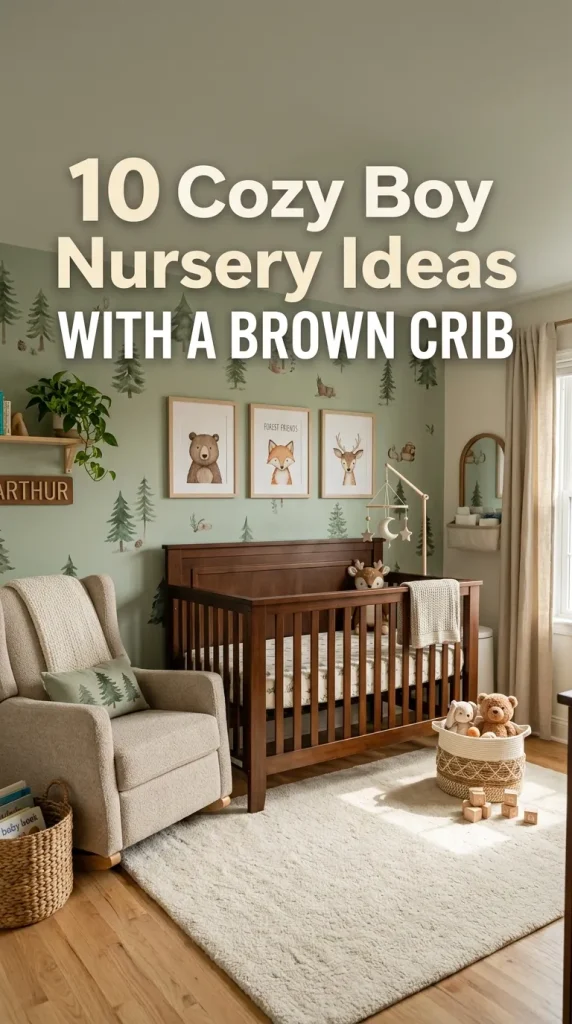
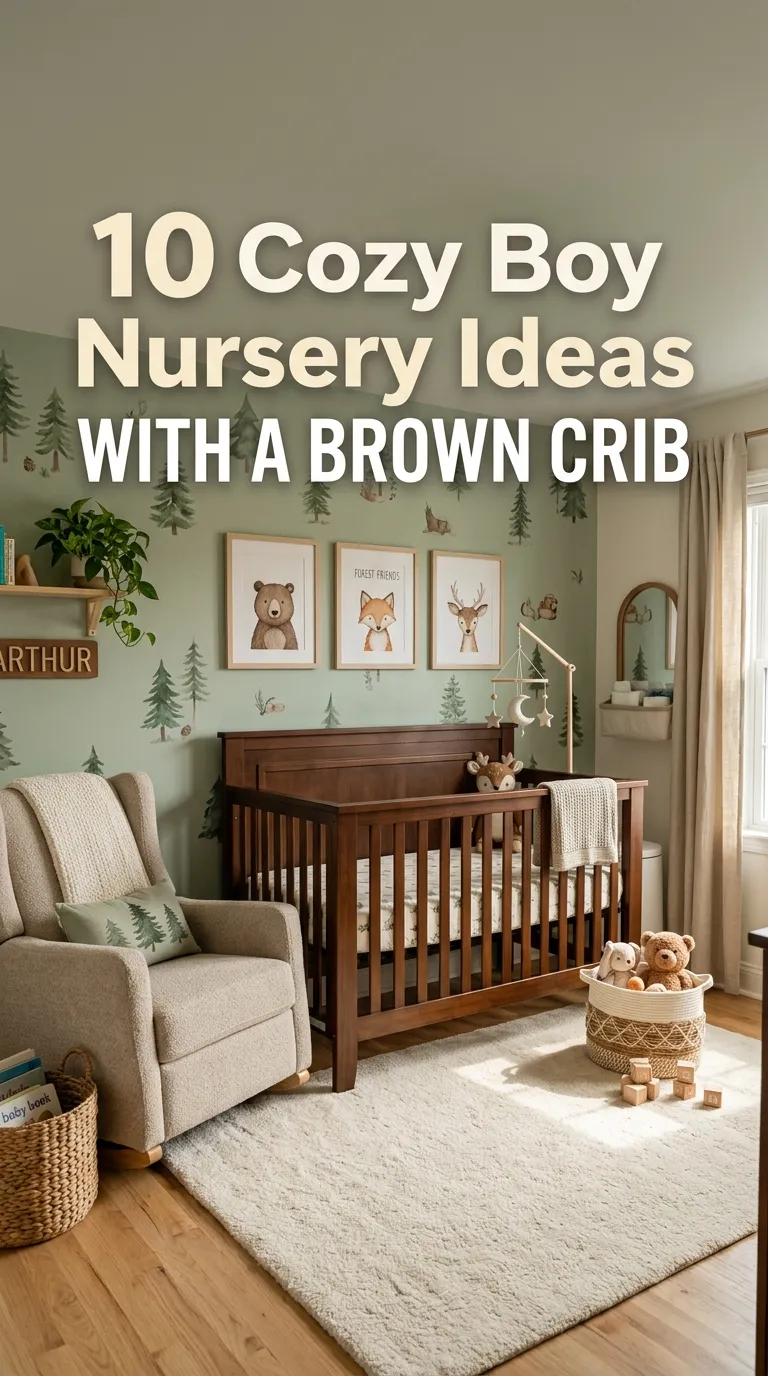
Designing a nursery for a baby boy around a brown crib offers a timeless, grounded aesthetic that blends natural warmth with modern versatility. In contemporary interior design, dark espresso, rich walnut, and natural oak cribs serve as sturdy focal points that anchor a room without feeling sterile. Readers exploring this guide will learn practical methods to style a brown crib using balanced color palettes, safe materials, and efficient spatial layouts. Incorporating popular Pinterest ideas allows parents to mix classic wooden furniture with soft textiles, subtle wall treatments, and functional nursery storage. This article provides a comprehensive, step by step approach to creating a soothing environment that adapts seamlessly as a child grows. Understanding how to pair rich wood tones with complementary decor ensures a cohesive, elevated look that remains practical for daily caregiving routines.
Why This Idea Is Trending or Useful
Brown cribs have regained significant popularity across modern design boards because they offer a warm, organic alternative to standard white or painted furniture frames. The practical value of a natural timber crib lies in its exceptional durability and ability to hide minor scuffs from daily use. Design trends increasingly prioritize natural textures, making deep walnut and warm chestnut finishes ideal for creating cozy, layered spaces. This approach holds strong DIY appeal, as parents can easily complement a wooden crib with simple handmade wall art, woven baskets, and accessible textile additions. Furthermore, dark and medium wood tones are highly beginner friendly, effortlessly matching a wide variety of color schemes ranging from soft sage green and warm taupe to deep navy blue. Choosing a brown crib creates an enduring foundation that easily evolves from an infant nursery into a toddler room.
Materials and Preparation
Thorough planning and proper room preparation are essential before arranging nursery furniture or installing wall decor. Begin by measuring the floor dimensions to determine the optimal placement for the crib, ensuring it stands clear of window cords, heaters, and hanging drapes. Essential materials for completing a full room setup include a solid wood brown crib, a firm breath-ability certified mattress, non-toxic interior paint, wall anchors, and natural fiber textiles. Required tools for assembly and installation include a spirit level, measuring tape, power drill, painter’s tape, and microfiber cleaning cloths. Prepare all wall surfaces by cleaning away dust and patching nail holes before applying any paint or wallpaper. Selecting a harmonious color palette containing warm neutrals, soft olives, or muted blues will simplify material selection and ensure all decorative elements coordinate seamlessly across the room layout.
MAIN IDEAS SECTION
Idea 1: Deep Walnut Crib with Soft Sage Green Accent Wall
How to Create
Pairing a deep walnut crib with a soft sage green wall creates a calming, nature-inspired focal point in a boy’s nursery. Begin by wiping down the main wall behind the crib location, applying painter’s tape along the ceiling line, adjacent corners, and baseboards. Apply two coats of zero-VOC matte sage green interior paint using a smooth microfiber roller, allowing full drying time between applications. Assemble the dark walnut crib and position it centrally against the painted accent wall, ensuring a two-inch gap between the frame and the wall for proper air circulation. Dress the mattress in a crisp cream fitted cotton sheet featuring a subtle leaf or botanical outline. Hang a set of three light oak picture frames horizontally above the crib line, filling them with minimalist line-art prints of forest trees printed on textured paper.
Idea 2: Warm Chestnut Crib with Exposed Brick Wallpaper Feature
Setup Method
Combining a warm chestnut wooden crib with an industrial exposed brick wallpaper backdrop introduces rich architectural texture into a modern nursery. Select a high-quality, peel-and-stick wallpaper featuring a distressed cream or light red brick pattern to maintain a bright yet rustic environment. Measure the accent wall carefully, cutting wallpaper strips to length while leaving a two-inch margin at the top and bottom for precise trimming. Apply the wallpaper from top to bottom, smoothing out air bubbles with a plastic squeegee tool before trimming the excess edges along the baseboard. Position the chestnut crib flush against the center of the patterned wall, grounding the layout with a large, low-pile off-white wool rug underneath. Complete the setup by placing a neutral linen nursing chair nearby, creating a balanced, urban loft aesthetic that feels warm and structured.

Idea 3: Mid-Century Modern Brown Crib with Geometric Terracotta Paint
Step-by-Step Guide
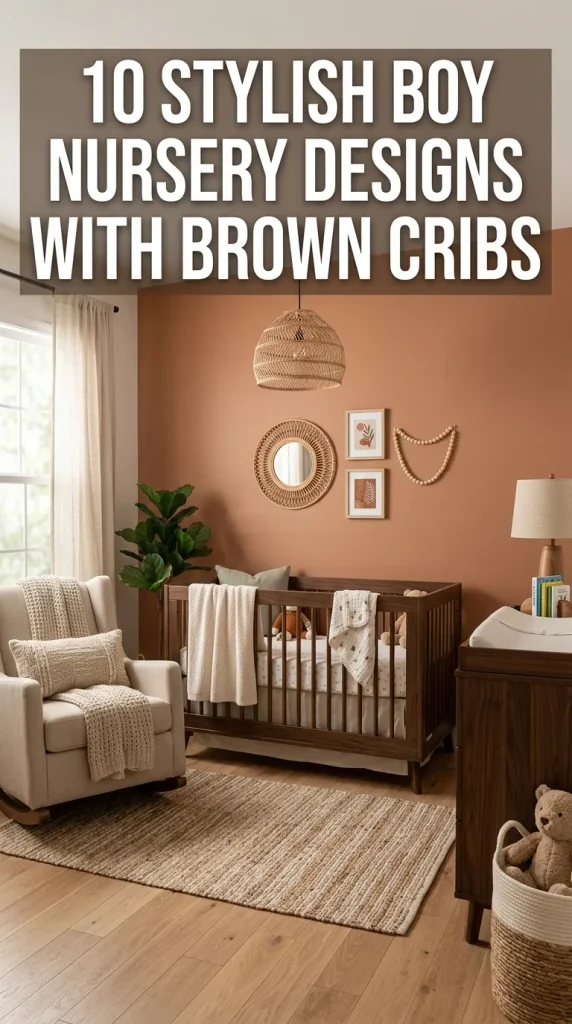
Embracing a mid-century modern brown crib against a bold, geometric terracotta wall shape delivers an energetic yet sophisticated aesthetic. Mark a large arch or offset diagonal shape on a light beige wall using a pencil, string, and a spirit level to define clean geometric boundaries. Outline the outer border of the shape securely with flexible painter’s tape, smoothing the edges firmly to prevent paint bleed. Paint the interior of the shape using a warm terracotta shade, applying two thin coats for complete coverage before carefully peeling away the tape. Place a mid-century brown crib with tapered wooden legs directly over the painted geometric backdrop. Layer the mattress with a plain ivory fitted sheet, and accent the adjacent wall space with a floating walnut shelf holding a small potted succulent and rounded wooden stacking toys for a balanced look.
Idea 4: Natural Oak Brown Crib with Deep Navy Wall Paneling
Execution Process
Styling a light oak brown crib against dark navy wainscoting or board-and-batten paneling provides a dramatic high-contrast design that grounds the nursery. Install vertical wooden battens along the lower half or full height of the wall, securing them into wall studs with finishing nails and construction adhesive. Prime and paint the entire paneled wall in a deep matte navy blue, creating a rich backdrop that highlights the natural grain of the wooden crib. Position the oak crib centrally against the dark paneling to allow the warm wood tones to stand out clearly. Dress the crib with a simple white fitted sheet and place a woven seagrass storage basket beside the frame to hold extra blankets. Mount a simple brass wall sconce nearby to add a warm, metallic highlight that softens the dark wall tone.
Idea 5: Espresso Brown Crib with Forest Woodland Wall Mural
How to Make
Installing a full-scale forest woodland wall mural behind a dark espresso crib creates an immersive, outdoor-inspired nursery environment. Select a removable woven fabric wall mural depicting misty pine trees, mountain silhouettes, or subtle woodland fauna in muted gray and green tones. Clean the drywall thoroughly and install the vertical mural panels systematically from left to right, overlapping seams according to the manufacturer instructions. Smooth the fabric surface with a soft felt scraper to eliminate air pockets and align the landscape pattern precisely across panels. Set the dark espresso crib directly in front of the sweeping woodland landscape, creating a focal point that draws the eye upward. Pair this setup with a natural jute area rug and a light olive throw blanket draped over a nearby glider chair to harmonize with the mural.
Idea 6: Classic Mahogany Crib with Warm Sand Neutral Textiles
Setup Method
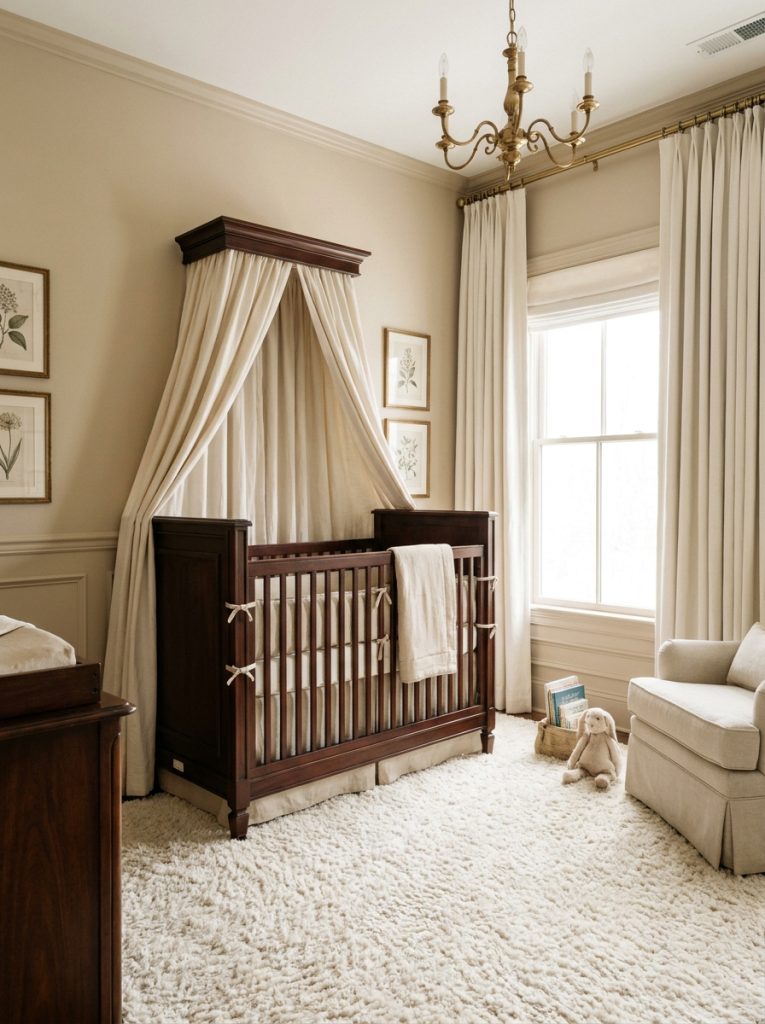
Pairing a classic mahogany brown crib with a monochromatic palette of warm sand and cream textiles produces an elegant, serene nursery environment. Paint the entire room in a soft, warm beige shade to establish a continuous, soothing background that reflects daylight evenly. Place the mahogany crib along the longest clear wall, anchoring the footprint with a plush, high-pile cream area rug extending two feet beyond the crib sides. Layer the crib mattress with a sand-colored fitted cotton sheet, adding a tailored cream crib skirt underneath for a finished, traditional look. Flank the crib with two tall cream-colored blackout curtain panels hung near the ceiling line to elongate the walls visually. This clean, minimalist approach emphasizes high-quality wooden craftsmanship while maintaining a quiet, restful space for sleep.
Idea 7: Distressed Brown Timber Crib with Industrial Wire Storage
Execution Process
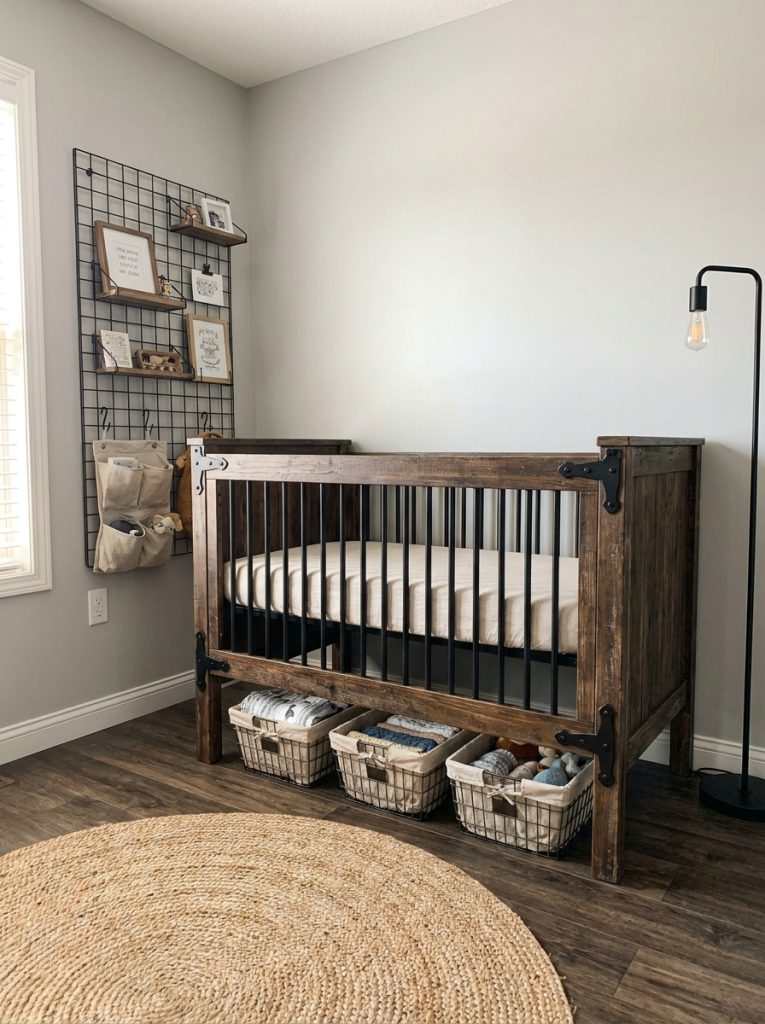
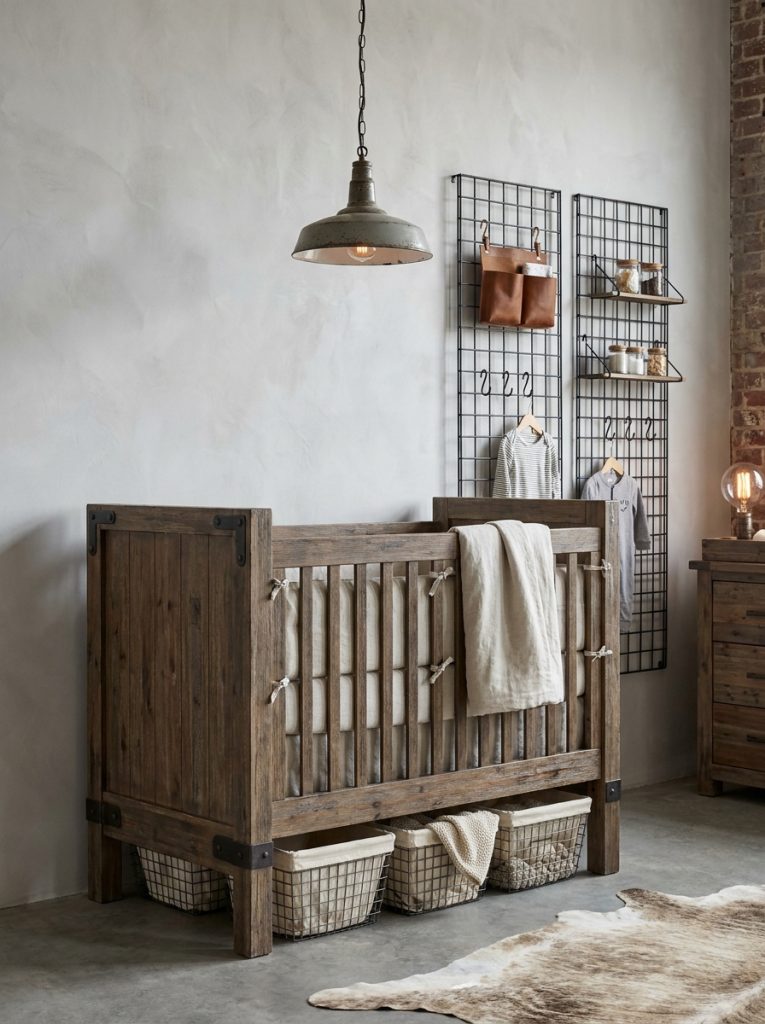
Designing an industrial-chic nursery around a distressed brown timber crib combines rugged charm with practical daily storage solutions. Position the distressed timber crib against a neutral light gray wall, allowing the weathered wood grain and dark iron accent bolts to serve as primary visual details. Mount a black iron wall grid directly above an adjacent changing table station, using wire S-hooks to hold small hanging canvas pouches for daily supplies. Place two dark metal wire baskets with washable fabric liners beneath the crib to store extra bedding, swaddles, and plush toys neatly off the floor. Complete the room layout with a matte black floor lamp positioned near a dark gray upholstered rocking chair, creating a functional, organized space with an edgy modern feel.
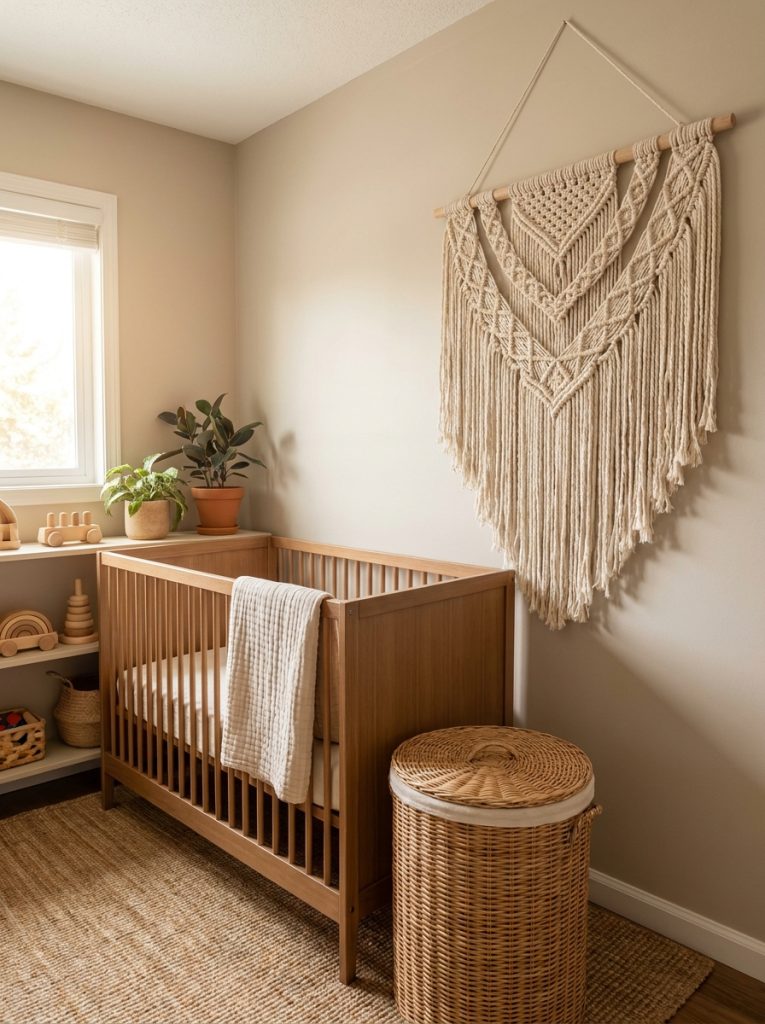
Idea 8: Dark Walnut Crib with Southwestern Patterned Accent Rug
How to Create
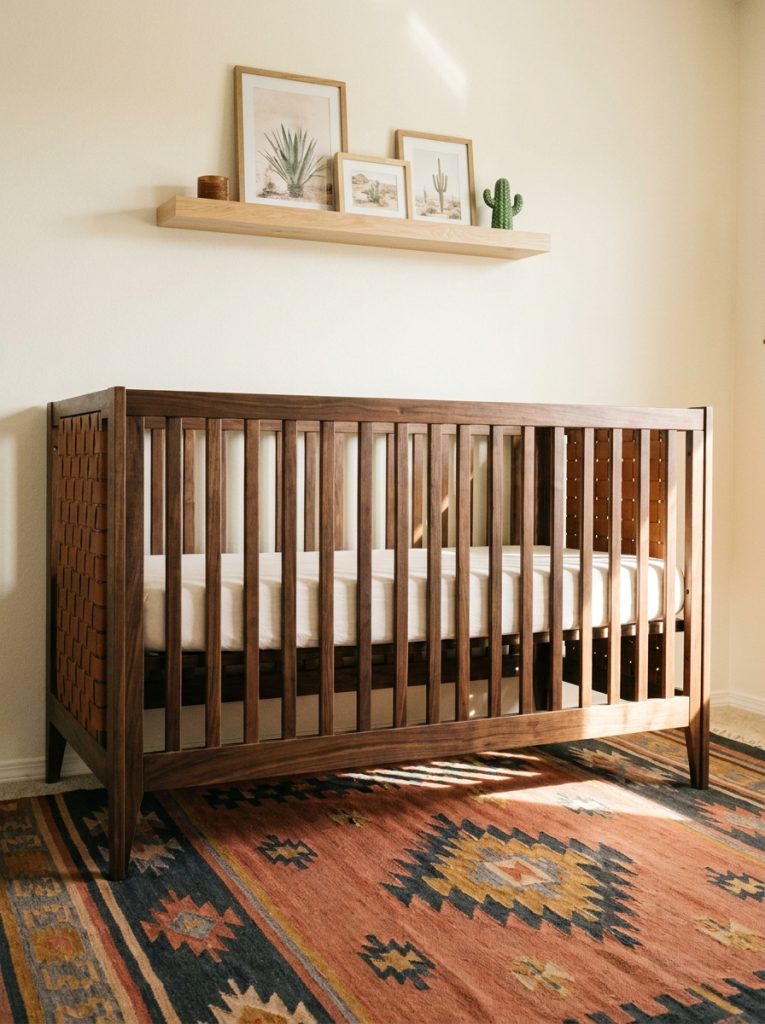
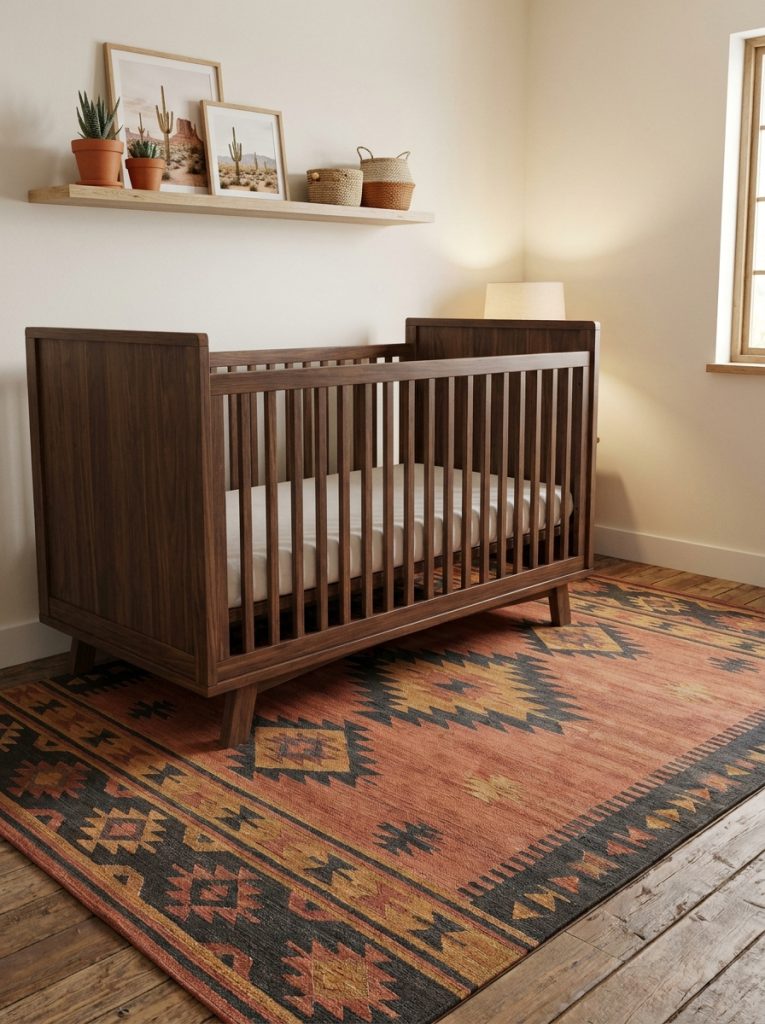
Anchoring a dark walnut crib with a vibrant, geometric southwestern area rug brings warmth, culture, and rich visual texture into a baby boy’s room. Position the walnut crib along a neutral cream wall, ensuring the room remains bright and uncluttered around the main furniture pieces. Spread a large flatweave area rug featuring terracotta, charcoal, beige, and mustard southwestern motifs centrally under the front legs of the crib. Choose a non-slip rug pad to lay beneath the carpet, ensuring the floor surface remains stable and completely safe for walking. Dress the crib mattress in a solid off-white fitted sheet, allowing the intricate rug patterns on the floor to remain the primary design feature. Accent the wall space with a light timber floating shelf displaying framed desert landscape prints.
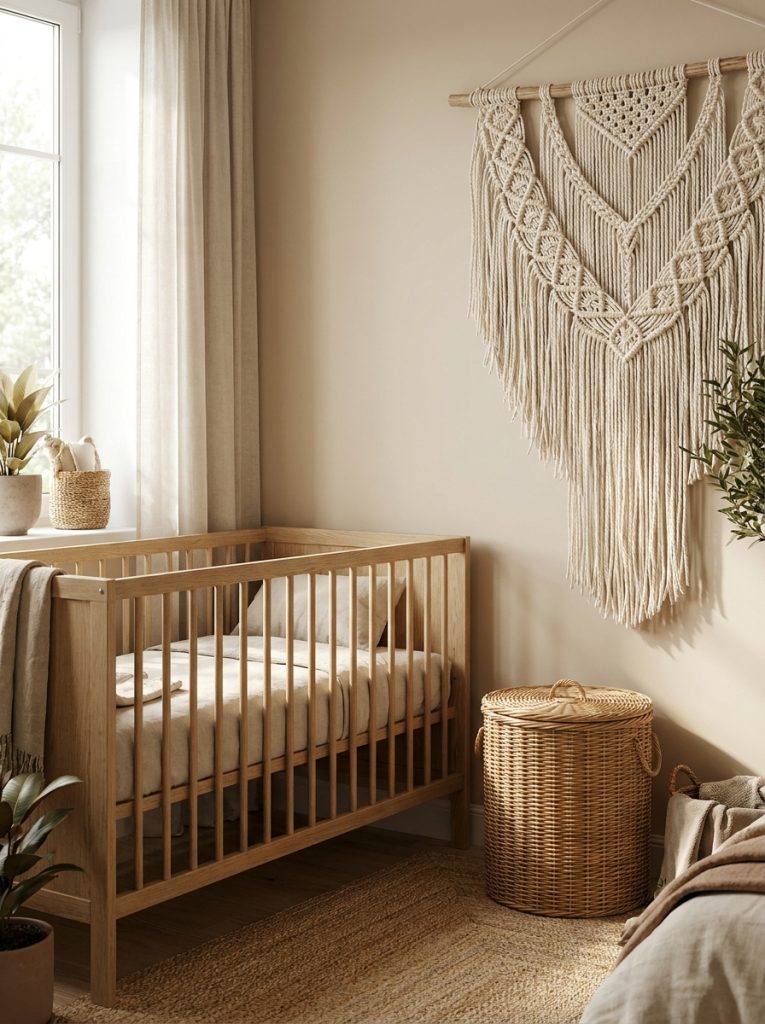
Idea 9: Light Brown Wood Crib with Hanging Macrame Wall Art
Step-by-Step Guide
Combining a light brown wooden crib with a large woven macrame wall hanging creates a soft, bohemian-inspired nursery atmosphere filled with tactile texture. Select a handcrafted macrame wall hanging made from natural, unbleached cotton cord suspended from a smooth wooden dowel or natural driftwood branch. Mount a heavy-duty wall hook securely into a wall stud above the changing table or adjacent to the crib wall, ensuring all hanging cords remain completely out of reach from inside the crib. Center the light brown wood crib below or alongside the textile art, allowing the soft fringe to contrast gently against the smooth wooden crib slats. Layer the crib with a beige linen fitted sheet and place a round woven wicker storage hamper nearby to reinforce the organic, relaxed design theme throughout the space.

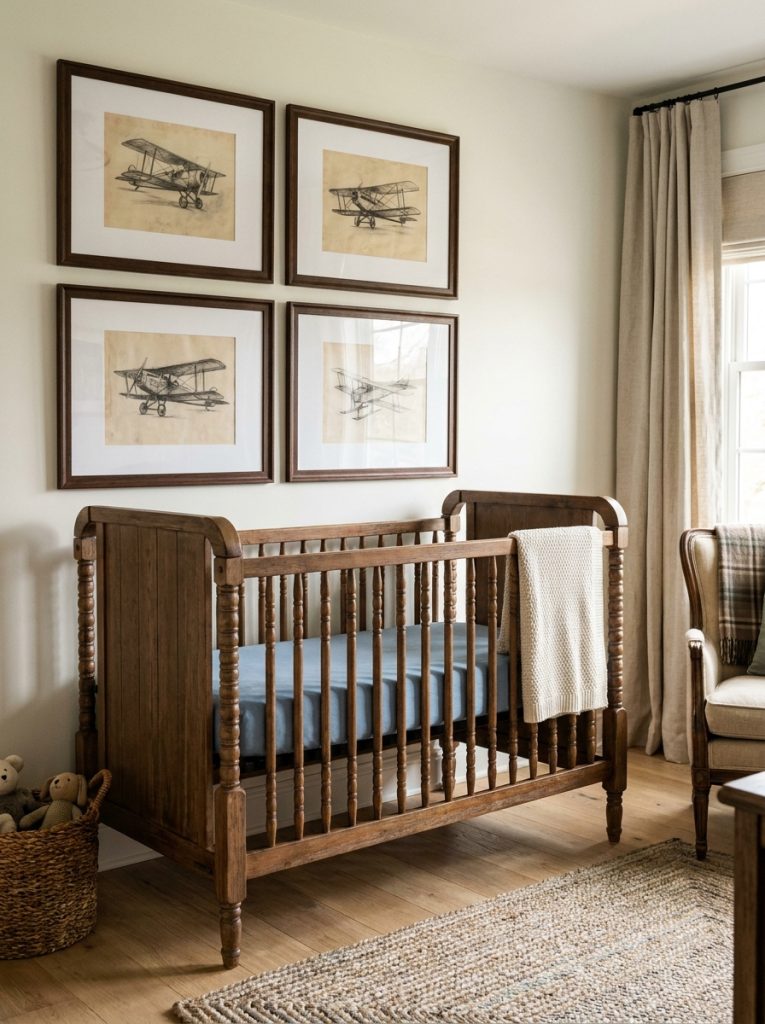
Idea 10: Rustic Warm Brown Crib with Vintage Aviation Art Grid
How to Make
Arranging a vintage aviation gallery wall above a rustic warm brown crib creates an imaginative, structured theme tailored for a baby boy’s nursery. Frame four matching vintage-style sketches of classic airplanes inside thin dark brown wooden frames fitted with wide off-white matting. Measure the wall space carefully, using painter’s tape and a spirit level to map out a precise two-by-two grid layout with three inches of uniform spacing between frames. Mount the framed artwork securely using drywall anchors, ensuring the bottom row sits well above the highest reach of a standing child inside the crib. Position the warm brown crib directly beneath the gallery grid, styling the mattress with a light blue fitted sheet. The combination of dark wood frames, detailed technical drawings, and warm furniture delivers a refined, timeless look.
Common Beginner Mistakes and How to Avoid Them
A frequent mistake when decorating around a brown crib is selecting wall paint and flooring in identical dark wood shades, which causes the room to feel small and visually heavy. Pairing a dark walnut crib with dark brown walls or un-laminated dark flooring absorbs light and eliminates necessary spatial contrast. To avoid this outcome, always maintain a clear contrast ratio by pairing dark or medium wooden cribs with lighter wall tones such as warm ivory, soft gray, sage green, or muted sand. Another common error is placing heavy framed artwork, floating shelves, or loose wall decor directly above the crib mattress without proper mounting hardware. Ensure any decorative item installed near the sleeping zone is anchored directly into structural wall studs or secured with heavy-duty anchors. Additionally, keep all hanging cords, curtain ties, and shelf decor completely out of arm’s reach from inside the crib.
Practical Tips for Better Results
Achieving professional results when styling a nursery depends on balancing dark furniture tones with soft lighting and natural textures. Test paint swatches directly on the nursery walls before committing to a full color scheme, observing how the shades look under morning natural light and evening lamp illumination. Select low-VOC or zero-VOC interior paints and wood finishes to maintain optimal indoor air quality for the baby. When placing a brown wooden crib on hard surfaces like tile or laminate flooring, use a large area rug with a non-slip rug pad underneath to soften acoustics and add thermal comfort. Choose window coverings with built-in blackout linings to facilitate reliable daytime naps while keeping drapery hardware mounted high to elongate the ceiling line. Finally, ensure all large furniture pieces, including dressers and changing tables, are anchored firmly to the wall with safety straps.
Styling, Presentation, or Organization Ideas
Maintaining an organized, serene nursery requires integrating functional storage solutions that harmonize with the rich tones of a brown wooden crib. Utilize natural materials such as woven seagrass baskets, dark fabric bins, and timber storage crates to store toys, extra diapers, and swaddle blankets neatly. Arrange clothing inside dressers using soft fabric drawer dividers, grouping items by size and type to streamline daily changing routines. Keep flat surfaces like changing table tops uncluttered by mounting small floating ledges nearby to hold daily lotions, wipes, and grooming supplies within easy reach. Choose multi-functional furniture, such as a changing table dresser combo with removable top rails, ensuring the piece adapts easily as the child grows. Grouping decorative items in sets of three on open shelves creates a visually balanced display that maintains a clean atmosphere.
Budget or Time Planning
Executing a full nursery design project efficiently requires establishing a clear budget allocation and realistic working schedule before purchasing materials. Basic creative project tasks, such as painting a single accent wall, assembling a wooden crib, or hanging a gallery art grid, can easily be completed within three to six hours over a weekend. Larger projects involving wall paneling installation, full-room wallpapering, and comprehensive furniture assembly typically require two full days for proper execution. Allocate roughly fifty percent of your overall budget toward core foundational items, specifically a certified safe crib, a high-quality firm mattress, and a supportive nursing glider. Set aside thirty percent for functional elements like lighting, window treatments, and storage rugs, reserving the final twenty percent for DIY wall decor, paint supplies, and accent bedding essentials.
Creative Expansion and Advanced Inspiration
For parents seeking advanced design ideas to elevate a nursery with a brown crib, introducing custom architectural details adds long-term value and character. Consider installing floor-to-ceiling vertical board-and-batten trim painted in a muted forest green or slate blue, creating a textured backdrop that highlights the crib frame. Advanced DIY enthusiasts can build custom wooden closet storage systems featuring built-in cubbies and warm timber hanging rods to maximize storage efficiency in small rooms. Integrating subtle dimmable LED strip lighting concealed behind floating timber shelves casts a soft, indirect backlight across the walls, perfect for late-night feedings without disturbing a sleeping infant. Combining these custom architectural additions with smart home features, such as app-controlled nursery thermostats and automated blackout shades, produces a modern, highly functional nursery environment designed for long-term versatility.