10 Fairy Tales and Fables Crafts for Toddlers Ideas

Fairy tales and fables introduce toddlers to imaginative stories, memorable characters, and valuable lessons through simple, engaging activities. Combining these classic stories with hands-on crafts helps young children strengthen creativity, fine motor skills, and early storytelling abilities while having fun. Pinterest ideas featuring fairy tale crafts remain popular because they transform familiar stories into colorful creative projects using inexpensive materials that are easy to find at home or in the classroom. Parents, caregivers, and teachers can use these beginner friendly activities during story time, preschool lessons, rainy afternoons, or seasonal celebrations. This guide shares ten practical fairy tale and fable craft ideas designed especially for toddlers, along with preparation tips, organization advice, and creative inspiration to make every project enjoyable, safe, and educational.
Why Fairy Tale Crafts Are Trending
Fairy tale and fable crafts continue to trend on Pinterest because they combine imaginative play with meaningful learning experiences. Young children naturally enjoy creating characters, castles, forests, and animals from stories they recognize, making these projects both entertaining and educational. Many crafts require only simple household materials, making them accessible for families, daycare centers, and preschool classrooms working with different budgets. These creative projects encourage toddlers to practice cutting, gluing, coloring, painting, sorting, and storytelling while developing confidence in their artistic abilities. Fairy tale crafts also provide opportunities for interactive reading, helping children connect story events with hands-on activities. Their combination of creativity, learning, and easy preparation makes them an excellent choice for both home and classroom environments.
Materials and Preparation
Preparing materials before beginning each craft helps toddlers remain focused and enjoy the creative process. Gather child-safe scissors, non-toxic glue, washable paint, construction paper, cardstock, crayons, colored markers, craft sticks, paper plates, cotton balls, pom-poms, googly eyes, pipe cleaners, felt sheets, stickers, foam shapes, yarn, and recyclable cardboard tubes. Protect work surfaces with newspaper or reusable craft mats and organize materials into small containers that children can easily reach. Read the selected fairy tale or fable before beginning the activity so toddlers understand the characters and setting they will create. Keeping instructions simple and preparing pieces in advance makes each DIY project more manageable while allowing children to participate confidently and safely.
Idea 1: Paper Plate Fairy Castle
How to Create
Transform ordinary paper plates into colorful fairy tale castles that inspire imaginative storytelling. Cut a paper plate in half to form the main castle wall, then help toddlers glue construction paper towers, windows, and doors onto the surface using simple geometric shapes. Add paper flags, glitter-free decorative stickers, and colorful crayons to personalize each castle while encouraging creativity. Cotton balls can represent fluffy clouds surrounding the castle, while green construction paper creates grassy hills beneath the walls. Encourage children to describe who lives inside the castle and invent simple adventures involving princes, princesses, fairies, or friendly dragons. This beginner friendly project strengthens shape recognition, fine motor coordination, and storytelling while introducing toddlers to classic fairy tale settings through hands-on learning.
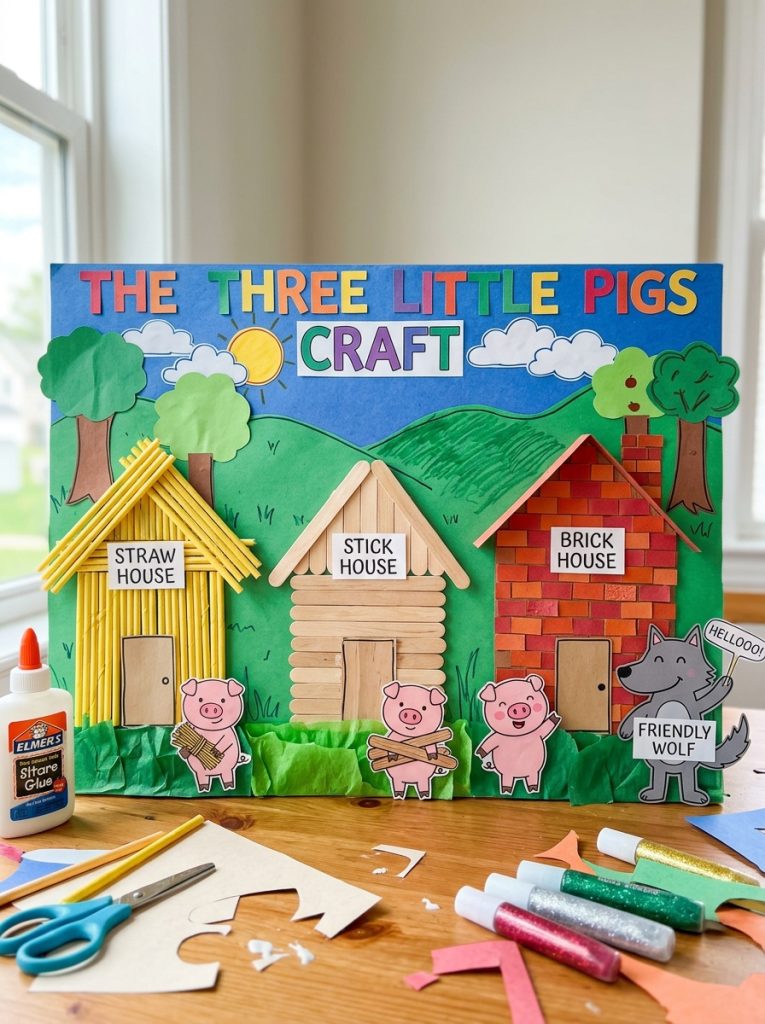
Idea 2: Three Little Pigs House Craft
How to Make
Help toddlers recreate the famous story by building three miniature houses using different craft materials. Use yellow paper strips for the straw house, craft sticks for the wooden house, and small rectangles of brown construction paper to represent bricks. Attach each house to a sheet of cardstock and encourage children to compare the textures and colors of the different building materials. Add simple pig faces using paper circles, markers, and googly eyes while creating a friendly wolf from gray construction paper. During the activity, discuss why some materials are stronger than others using age-appropriate language. This creative project encourages observation, storytelling, and early problem-solving while reinforcing one of the best-known fairy tales for young children.
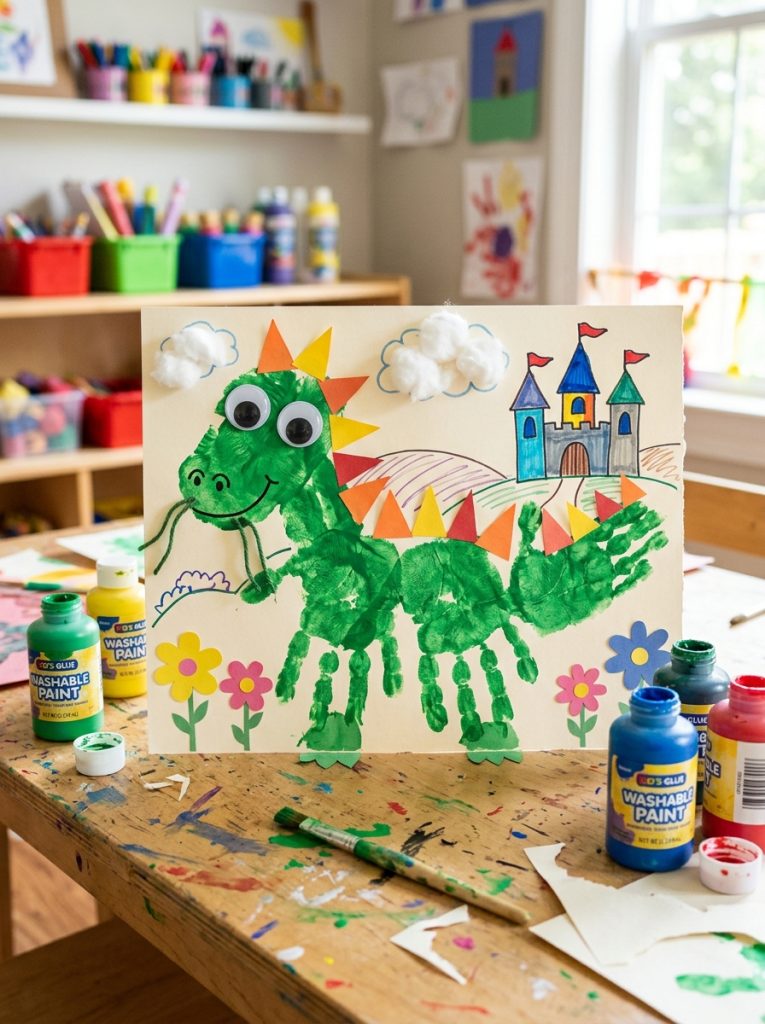
Idea 3: Friendly Dragon Handprint Art
Step-by-Step Guide
Handprint crafts offer toddlers an enjoyable way to create memorable fairy tale characters. Paint one hand with washable green paint and gently press it onto heavy paper to create the dragon’s body and wings. Once dry, add googly eyes, paper spikes, tiny feet, and colorful flames using construction paper and glue. Encourage children to decorate the background with castles, clouds, flowers, or trees that complete the dragon’s magical environment. While crafting, talk about how fairy tale dragons can be kind, helpful, and brave instead of frightening. This easy project supports sensory exploration, color recognition, and creative expression while giving children a finished artwork they can proudly display at home or school.
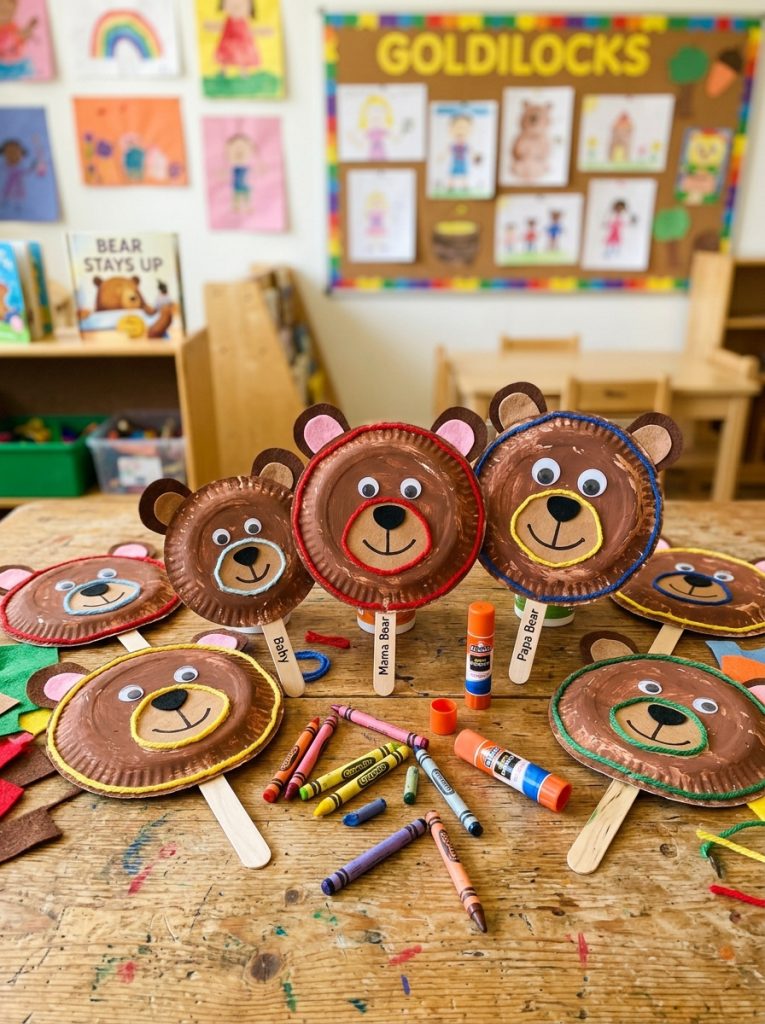
Idea 4: Goldilocks Bear Masks
Setup Method
Create simple bear masks inspired by the classic Goldilocks story using paper plates and craft supplies. Cut eye openings in the paper plates before attaching rounded construction paper ears to the top. Toddlers can color the masks using crayons or washable paint while adding paper noses, felt cheeks, and yarn for extra texture. Attach craft sticks to the bottom of each mask to create easy-to-hold handles suitable for small hands. Once completed, encourage children to retell parts of the story while pretending to be members of the bear family. This activity develops creativity, dramatic play, and early language skills while introducing toddlers to imaginative role-playing through simple handmade crafts.
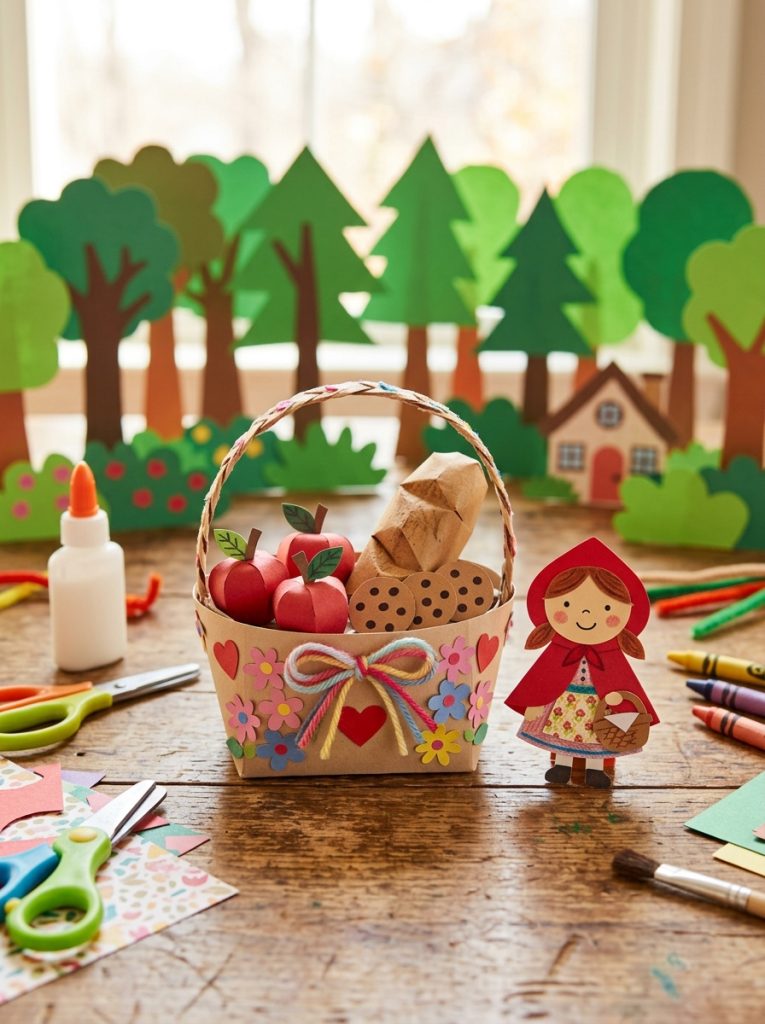
Idea 5: Little Red Riding Hood Basket
Execution Process
Make a miniature paper basket inspired by Little Red Riding Hood using folded construction paper or lightweight cardstock. Decorate the basket with paper flowers, heart stickers, and colorful markers before adding tiny paper food items such as bread, apples, flowers, or cookies. Create a simple paper cape for the main character using red construction paper and encourage toddlers to place the character beside the basket during story time. Discuss the importance of staying with trusted adults while walking through the forest using gentle, age-appropriate language. This beginner friendly DIY project combines creative crafting with storytelling while strengthening fine motor skills and imaginative play.
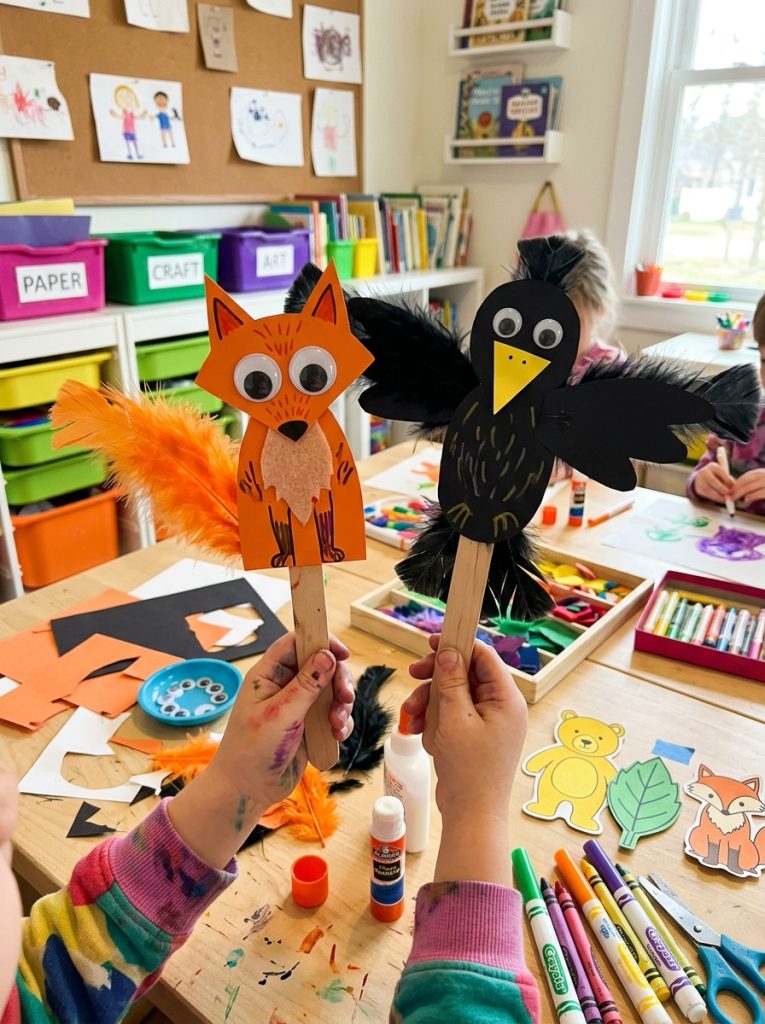
Idea 6: Fox and Crow Puppet Craft
How to Create
Bring a classic fable to life by making simple stick puppets featuring a fox and a crow. Cut large animal shapes from colored cardstock and allow toddlers to decorate them using crayons, feathers, googly eyes, and paper details. Glue each finished character onto a wooden craft stick to create easy puppets for storytelling. Encourage children to act out simple scenes while using different voices for each character. Keep the moral lesson simple by discussing kindness, honesty, and careful listening in ways toddlers can understand. This creative project supports language development, storytelling confidence, and imaginative role-play while introducing one of the best-known traditional fables.
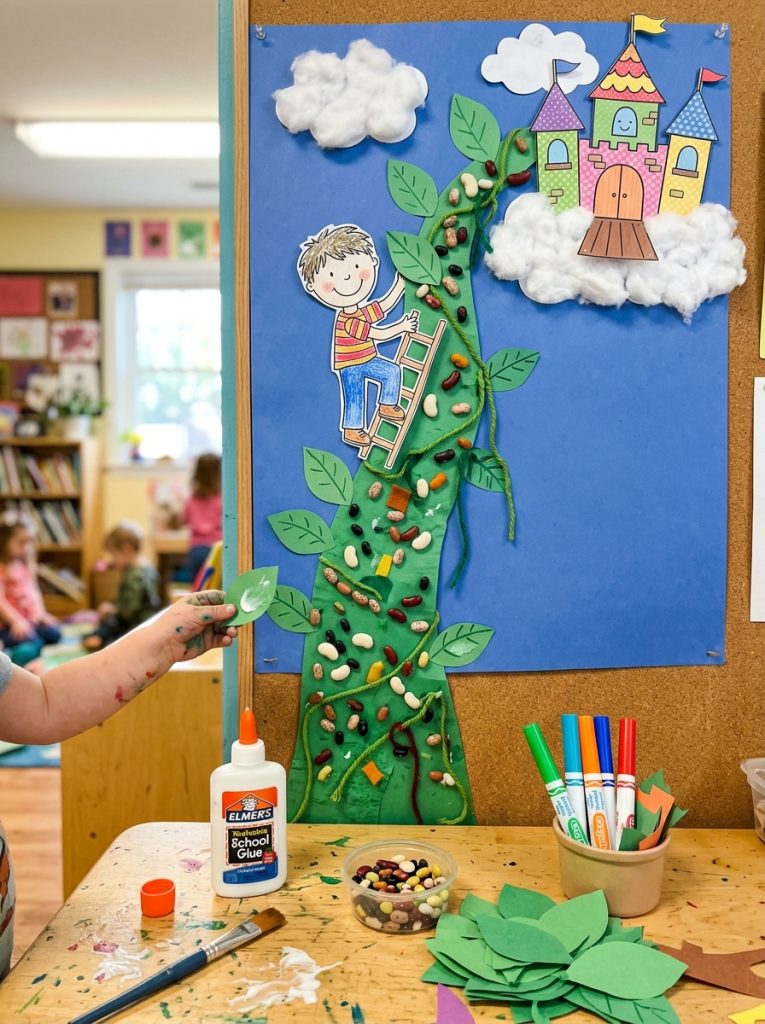
Idea 7: Jack and the Beanstalk Climbing Vine
How to Make
Create a giant beanstalk using a long strip of green construction paper decorated with leaves, paper vines, and colorful beans cut from cardstock. Attach the finished vine vertically to a large sheet of paper and add simple clouds, birds, and a friendly castle at the top. Toddlers can glue paper leaves onto the vine while counting them aloud to reinforce early number recognition. Create a small paper character climbing upward to encourage imaginative storytelling during the activity. This hands-on project develops fine motor skills, counting practice, and creative thinking while introducing one of the most recognizable fairy tale adventures.
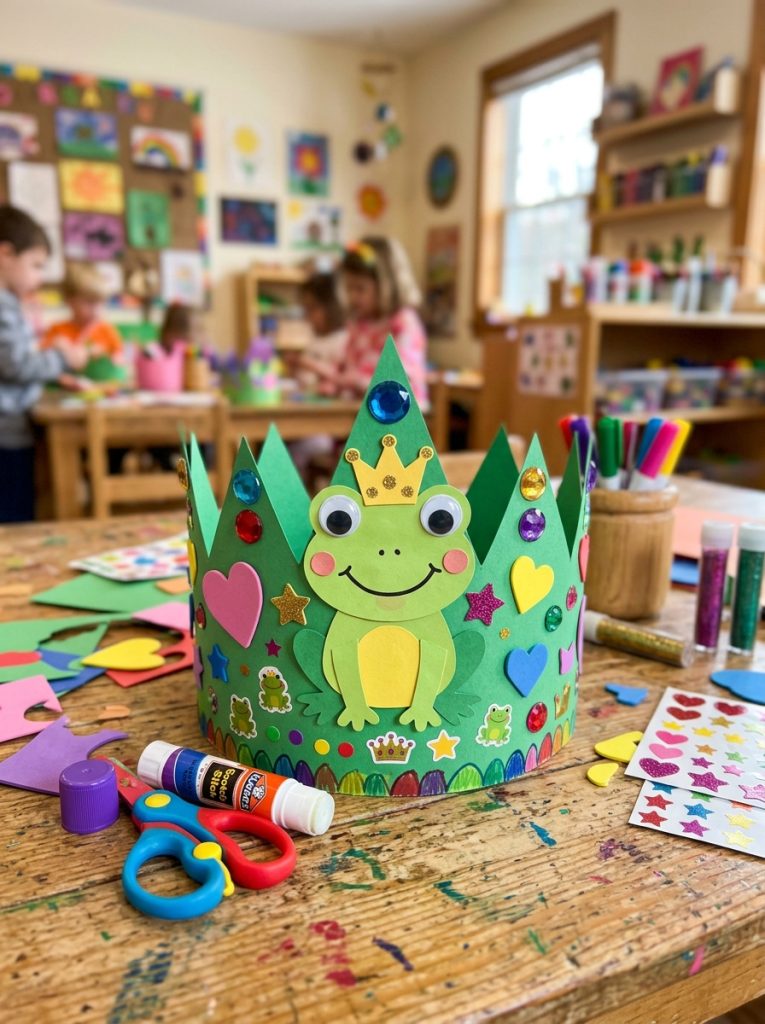
Idea 8: Frog Prince Crown Craft
Step-by-Step Guide
Help toddlers create shiny paper crowns inspired by the Frog Prince story using strips of cardstock, foam shapes, and colorful stickers. Decorate each crown with paper jewels, glitter-free sequins, heart cutouts, and bright markers that encourage personal creativity. Add a simple paper frog featuring large eyes and a smiling face to complete the fairy tale theme. Once assembled, children can wear their crowns while pretending to visit magical castles or enchanted gardens. This beginner friendly activity strengthens cutting, gluing, and decorating skills while supporting imaginative play and story recall through wearable handmade crafts.
Idea 9: Tortoise and Hare Race Track
Setup Method
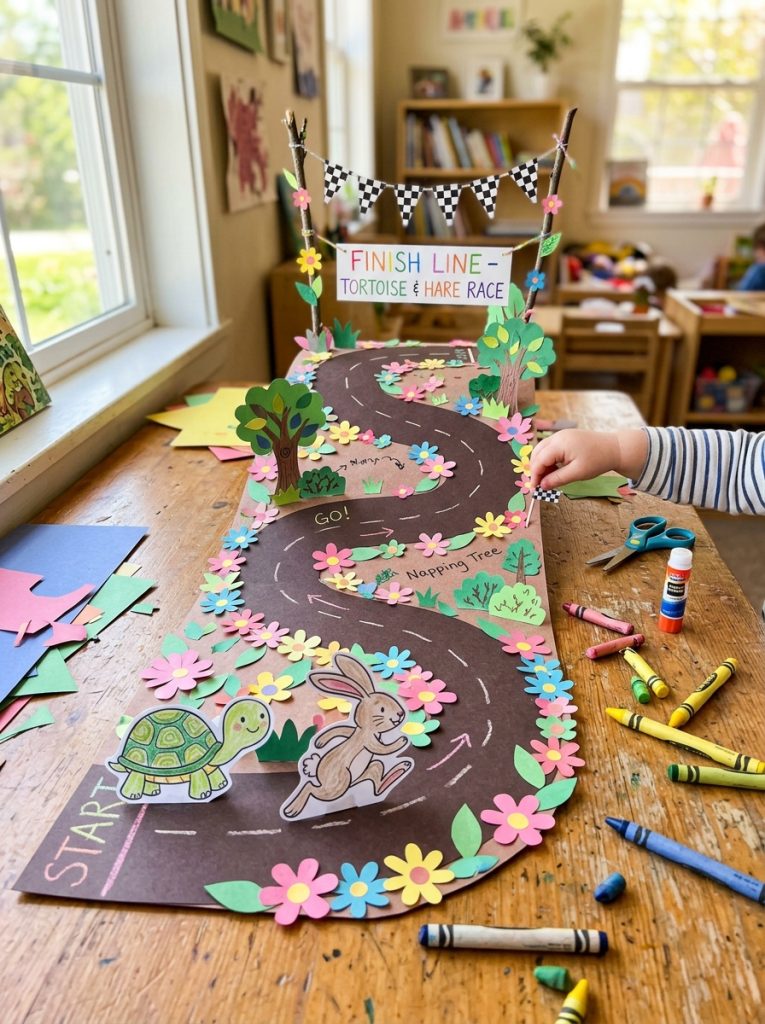
Design a colorful race track using large sheets of paper, markers, and simple cardboard pieces inspired by the famous fable. Draw a winding path across the page and decorate it with grass, flowers, trees, and finish-line flags. Create simple tortoise and hare figures from construction paper and allow toddlers to move them along the track while retelling the story. Discuss the importance of patience, persistence, and doing your best in language appropriate for young learners. This creative project combines storytelling with movement while encouraging hand-eye coordination and imaginative interaction throughout the activity.
Idea 10: Fairy Garden Nature Collage
Execution Process
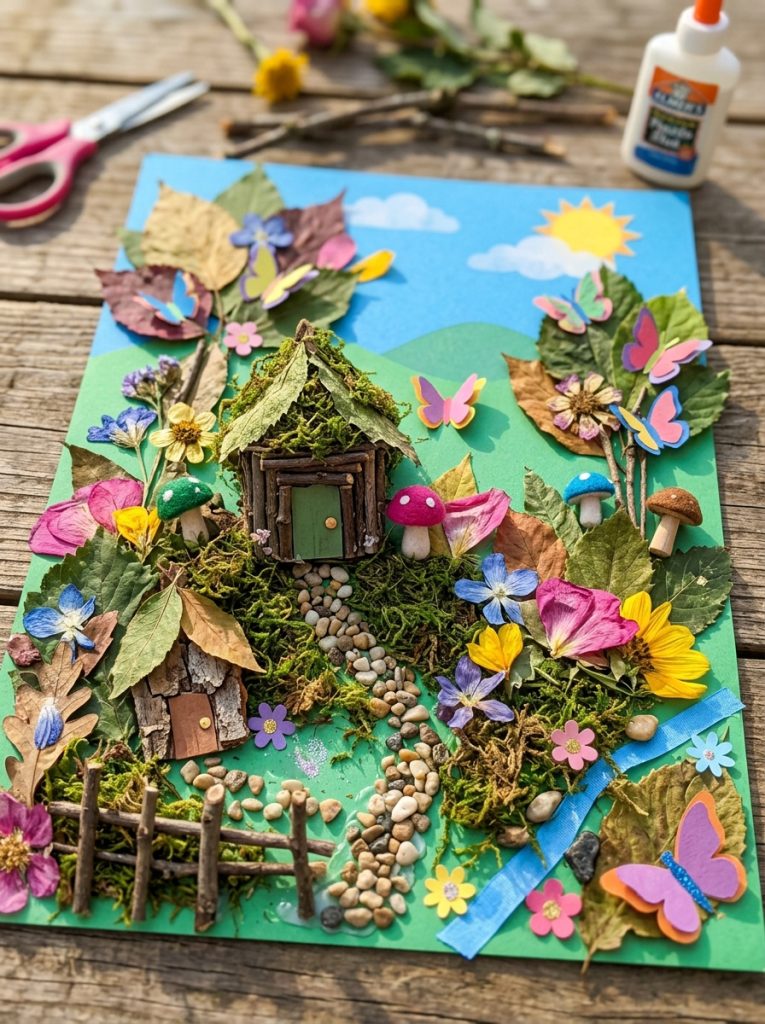
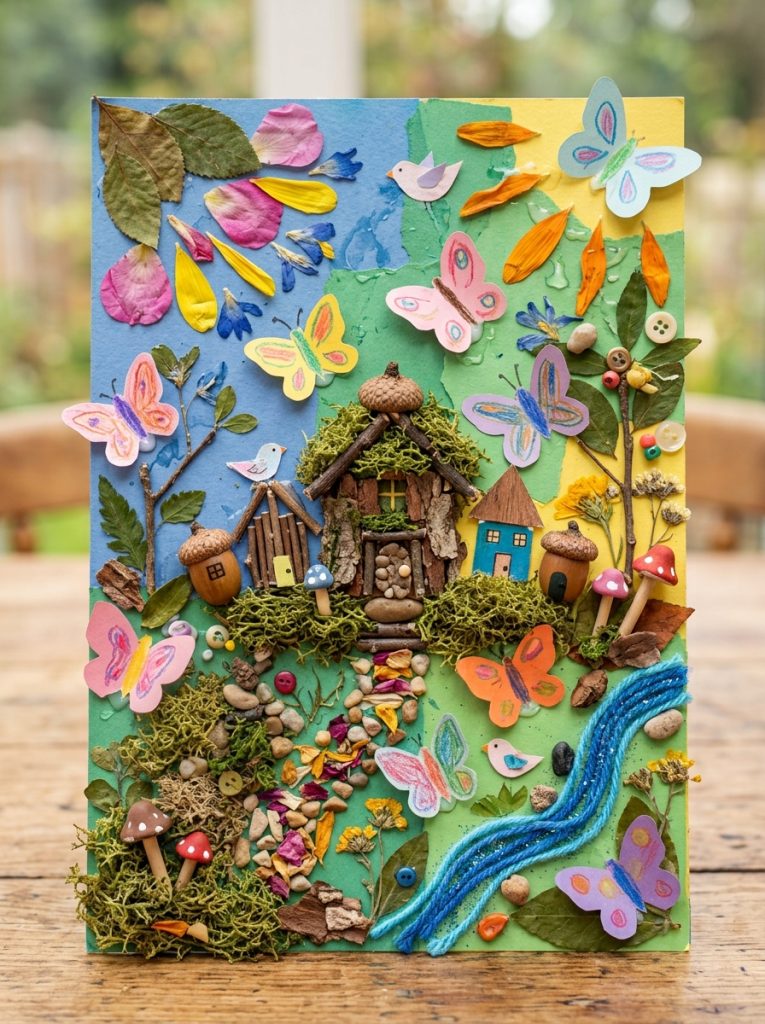
Collect safe natural materials such as leaves, flower petals, small twigs, grass, and pebbles during a supervised outdoor walk before creating a fairy garden collage indoors. Arrange the collected materials on sturdy cardstock to form tiny fairy houses, winding paths, trees, and gardens using child-safe glue. Add paper butterflies, flowers, mushrooms, and friendly fairies cut from colored paper to complete the magical landscape. Encourage toddlers to describe who lives in the garden and invent simple adventures involving magical creatures and forest animals. This creative project combines nature exploration with artistic expression while strengthening observation skills, creativity, and appreciation for the outdoors.
Common Beginner Mistakes and How to Avoid Them
One common mistake is choosing projects that include too many complicated steps for toddlers to complete independently. Select simple crafts with large pieces and easy instructions that match their developmental abilities. Preparing materials before beginning the activity helps children stay engaged and reduces waiting time. Another frequent issue is providing too many supplies at once, which can overwhelm younger children. Instead, introduce materials gradually as each step is completed. Adult supervision during cutting and gluing ensures safety while encouraging confidence. Focusing on creativity rather than perfection allows toddlers to enjoy the learning process and develop positive attitudes toward handmade creative projects.
Practical Tips for Better Results
Read the fairy tale or fable before starting each craft so children understand the characters and setting they are creating. Organize materials into separate containers for easy access and prepare difficult cutting tasks in advance when needed. Encourage toddlers to choose colors, decorations, and creative details independently to build confidence and imagination. Praise effort and participation rather than comparing finished projects. Keep craft sessions short enough to maintain attention while allowing breaks when necessary. Display completed artwork at home or in the classroom to celebrate each child’s creativity and reinforce pride in their accomplishments.
Styling, Presentation, and Organization Ideas
Create a dedicated display area where completed fairy tale crafts can be arranged alongside storybooks, handmade signs, and simple decorations. Hang artwork on a bulletin board or wall using colorful clips that allow projects to be rotated throughout the year. Store remaining materials in labeled containers to simplify future crafting sessions and maintain organization. Arrange finished crafts according to story themes so children can revisit familiar characters during reading time. A well-organized creative space encourages toddlers to explore additional Pinterest ideas while making future DIY projects easier to prepare and enjoy.
Budget and Time Planning
Most fairy tale and fable crafts can be completed using affordable materials already available in many homes or classrooms. Construction paper, paper plates, cardboard tubes, craft sticks, washable paint, and recycled packaging provide excellent foundations for creative projects without requiring expensive supplies. Planning one craft each week allows children to explore different stories while gradually building a collection of handmade decorations. Preparing materials before the activity begins reduces frustration and keeps sessions organized. Budget-friendly projects often produce the most meaningful learning experiences because they encourage creativity instead of relying on costly materials.
Creative Expansion and Advanced Inspiration
As toddlers become more confident, expand these creative projects into themed story days featuring costumes, puppet shows, simple dramatic play, and matching songs. Build miniature fairy tale villages using recycled boxes, create sensory bins inspired by favorite stories, or design collaborative classroom murals where every child contributes a character or landscape. Seasonal decorations can also be incorporated by adding autumn leaves, spring flowers, or winter snow scenes to familiar fairy tale settings. These creative ideas encourage continued exploration while helping young children strengthen storytelling skills, imagination, artistic confidence, and a lifelong appreciation for books and creative learning.