10 Nursery Ideas Boy Neutral

Designing a neutral boy nursery offers a timeless, peaceful approach to modern home decor that seamlessly balances function and aesthetic appeal. Parents seeking versatile Pinterest ideas often turn to neutral palettes because they create a calm environment for newborns while easily adapting as the child grows. In this comprehensive guide, you will learn practical steps to design a gender-neutral space using soft wall tones, natural materials, and functional layouts. This article explores creative ideas that highlight layered textures, warm wood accents, and minimalist style principles without relying on traditional blue motifs. Adopting a neutral design scheme ensures your nursery remains versatile, budget friendly, and easy to maintain over time. By incorporating structured planning and thoughtful organization, you can transform any spare room into a serene, cozy sanctuary that supports both baby care routines and long-term aesthetic flexibility for your home.
Why This Idea Is Trending or Useful
Neutral boy nursery concepts are exceptionally popular in contemporary home decor because they prioritize longevity, visual calmness, and practical adaptability. Rather than replacing entire furniture sets or repainting walls during early childhood transitions, a neutral foundation allows easy updates through simple decor changes. This design philosophy holds strong practical value for parents who value sustainable interior choices and wish to minimize frequent redecorating costs. Furthermore, neutral nurseries offer immense DIY appeal and high accessibility for beginners, as working with muted tones requires less complex color theory matching. Subtle shades of taupe, greige, cream, and warm wood tones naturally diffuse light, making small nursery rooms feel noticeably larger and brighter. By focusing on organic textures, clean lines, and accessible materials, trending ideas in neutral nursery design provide an ideal balance of functional storage, effortless styling, and modern design warmth.
Materials and Preparation
Thorough planning and accurate preparation form the essential foundation of any successful nursery design project. Begin by measuring the dimensions of the room, noting natural light sources, door swing paths, and electrical outlet locations to optimize furniture placement. Gather essential preparation tools, including painter tape, high-grade wall primer, measuring tapes, spirit levels, and non-toxic interior wall paint in low-VOC formulas. For materials, focus on acquiring sustainable items such as solid wood furniture, organic cotton crib sheets, woven seagrass storage baskets, and soft wool rugs. Before applying paint or installing wall paneling, clean all wall surfaces thoroughly and repair any minor wall imperfections with spackling paste. Establishing a clear budget, selecting a consistent neutral color swatch board, and creating a step by step timeline will prevent unexpected delays during assembly. Adequate preparation ensures a smooth, stress-free execution process while maintaining a safe, healthy environment for your newborn.
Main Ideas Section
Idea 1: Soft Oatmeal and Textured Natural Linen
Step-by-Step Guide
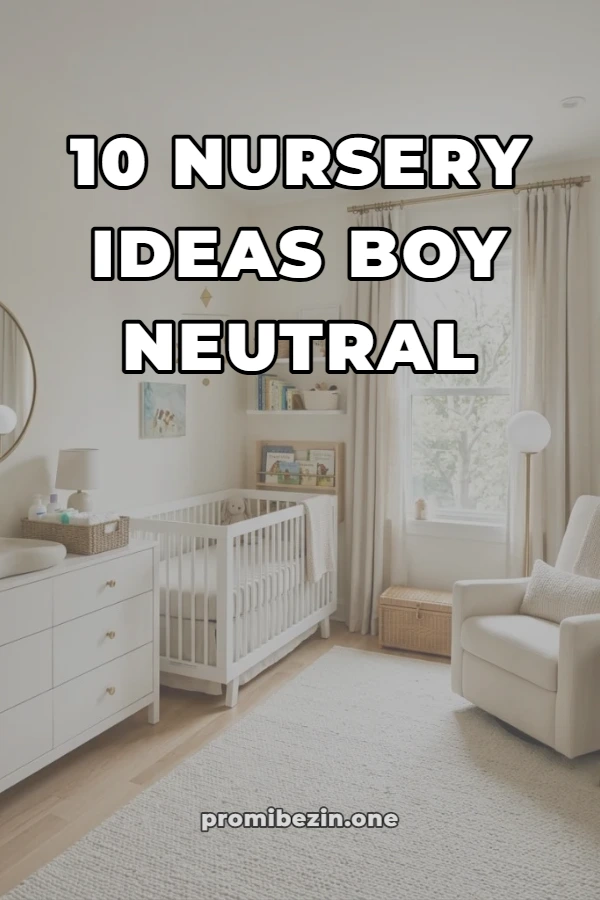
Creating a calm nursery foundation starts with a soft oatmeal wall finish combined with layered natural linen fabrics. Paint the primary walls in a warm oatmeal tone that serves as an inviting, light-reflecting canvas throughout the day. Position a clean-lined solid oak crib as the central focal point of the space, dressing it with breathable organic cotton and linen bedding in creamy ivory hues. Introduce an oversized natural linen window drape that hangs from floor to ceiling, enhancing room height while offering soft light control. Complement the crib area with a woven jute area rug layered beneath a plush cream wool rug to add tactile comfort underfoot. Add open floating wooden shelves above the changing table to hold neatly folded linen storage bins and minimal wooden decorative objects. Finish the space with soft, warm-lighting fixtures that highlight the natural weave of the fabrics, establishing a balanced, beginner friendly aesthetic that feels serene, spacious, and structured for daily care routines.
Idea 2: Sage Green and Warm Oak Wood Elements
Setup Method
Incorporating subtle muted sage green alongside natural warm oak elements delivers an earthy, gender-neutral aesthetic that feels grounded and tranquil. Begin by applying a muted sage green paint color to a single focal wall, preferably behind the crib, while painting remaining walls a warm off-white. Install a mid-century modern solid oak dresser opposite the focal wall, doubling its function by securing a contoured changing pad directly on top. Accentuate the natural wood theme by adding a floating oak picture ledge above the dresser to display framed neutral art prints and wooden keepsakes. Place a comfortable upholstered rocker chair in a cozy corner, paired with an oak side table and an organic cotton throw blanket. Secure light oak floating shelves on adjacent walls to keep daily essentials neatly arranged in neutral fabric bins. This balanced combination of soft green undertones and natural timber textures creates an easy project that brings subtle nature-inspired tranquility into your nursery layout.
Idea 3: Minimalist Greige with Layered Textiles
How to Make
A minimalist greige nursery focuses on monochromatic depth created through varied textile layers rather than bright color contrasts. Select a balanced greige paint that blends gray and beige seamlessly, applying it uniformly across all four bedroom walls for cohesive visual expansion. Introduce a matte white or natural light wood crib, keeping line profiles sleek and free from heavy ornamentation. Layer the floor area with a large, high-pile cream rug topped with a smaller textured boucle accent rug near the nursing chair. Choose a tailored upholstered glider chair in a soft stone fabric, adding a knitted beige throw pillow for lumbar support and visual warmth. Utilize floating wall brackets painted in the same greige shade to blend smoothly into the wall while supporting minimal book displays. Keep window treatments simple with light-filtering cellular shades framed by matte white curtain rods and plain cotton panels, achieving a highly organized, modern design that is straightforward to execute.
Idea 4: Warm Taupe Accent Wall with Board and Batten
Execution Process
Adding architectural texture through a board and batten wall treatment brings structured elegance to a neutral boy nursery without cluttering floor space. Measure the chosen accent wall carefully, spacing vertical wooden slats evenly across the lower two-thirds or full height of the surface. Secure the wooden boards firmly using wall adhesive and finish nails, filling seams with wood filler before sanding smooth. Apply a rich, warm taupe paint across the entire board and batten structure, selecting a satin finish for easy wiping and durability. Keep the surrounding walls a soft cream tone to ensure the architectural paneling remains the visual highlight of the room. Arrange a clean white crib directly against the taupe paneling, allowing the sharp geometric lines of the wood trim to frame the crib beautifully. Complement the architectural structure with minimalist brass wall sconces and simple woven storage baskets to complete a refined, easy project with timeless appeal.

Idea 5: Muted Terracotta and Clay Palette Accent
How to Create
Warm clay and soft terracotta tones provide a cozy, sun-drenched earthiness when used selectively alongside neutral beige backdrops. Paint three walls in a warm sand tone and select the main feature wall for a subtle color-blocked arch painted in muted clay. Position the crib directly within the painted arch boundary, creating a clear visual anchor for the entire nursery layout. Pair this earthy feature with light natural cane or rattan furniture pieces, such as a rattan laundry hamper and cane-panel changing table drawers. Select window drapes in a soft ivory shade to balance the warm clay tones and maximize incoming natural light during daytime hours. Incorporate a natural fiber flat-weave carpet underneath a beige armchair to reinforce the organic theme across the floor plane. Keep wall decor minimal by hanging framed neutral line drawings, ensuring the rich clay focal point remains clean, balanced, and perfectly suited for a peaceful infant sleeping environment.
Idea 6: Neutral Botanical Mural and Natural Rattan
Step-by-Step Guide
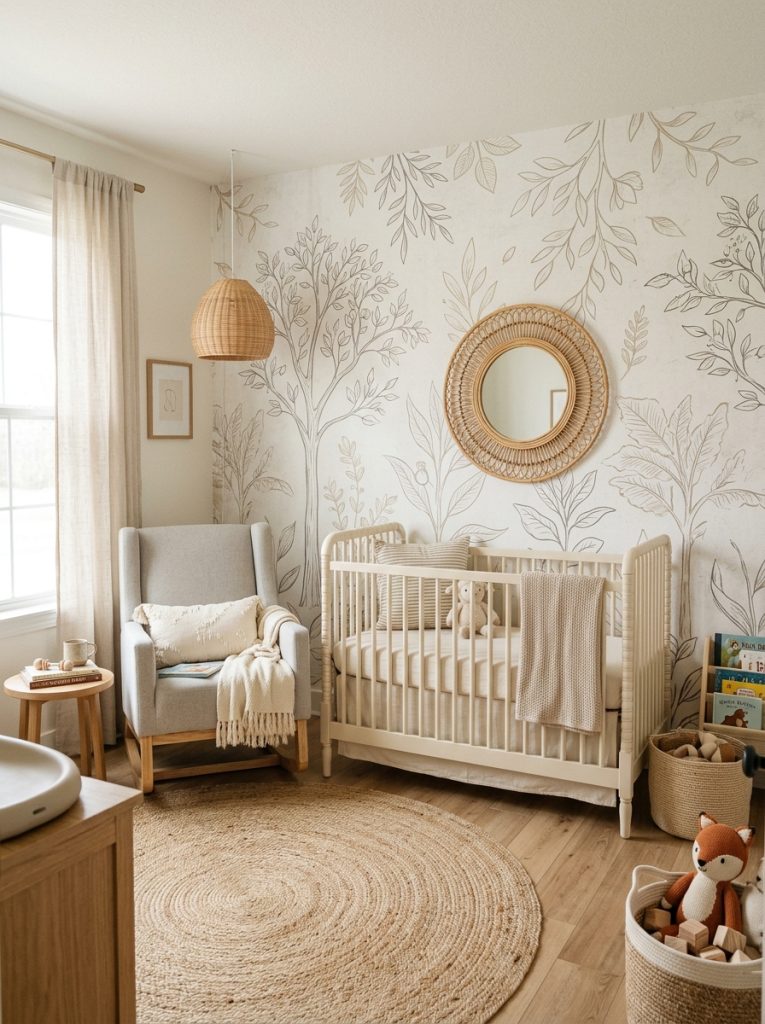
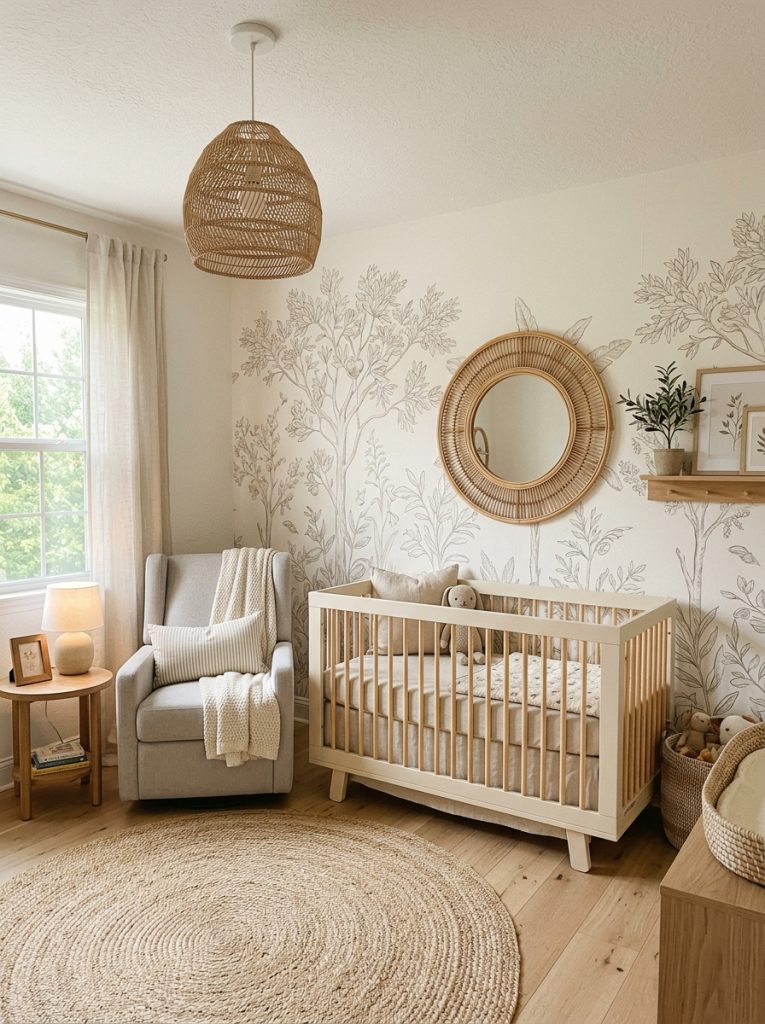
Introducing a neutral botanical wall mural adds subtle artistry to the nursery while maintaining a calm, gender-neutral atmosphere. Select a removable peel-and-stick wallpaper mural featuring muted beige, tan, or gray line illustrations of trees, leaves, or gentle mountain landscapes. Clean the wall thoroughly and apply the wallpaper panels step by step, using a smoothing tool to prevent air bubbles along seams. Place a natural wood or matte cream crib against the mural wall, ensuring the pattern frames the furniture without overwhelming the visual space. Incorporate natural rattan accents, such as a round rattan wall mirror, a woven pendant light shade, and small rattan storage trunks. Use soft cream bedding and plain linen curtains to keep the primary focus on the mural wall details. Position a light gray nursery glider nearby, anchored by a round natural jute rug, creating an inviting, aesthetic space that feels balanced, artistic, and accessible for beginner DIY installations.
Idea 7: Creamy Off-White and Brass Hardware Harmony
Setup Method
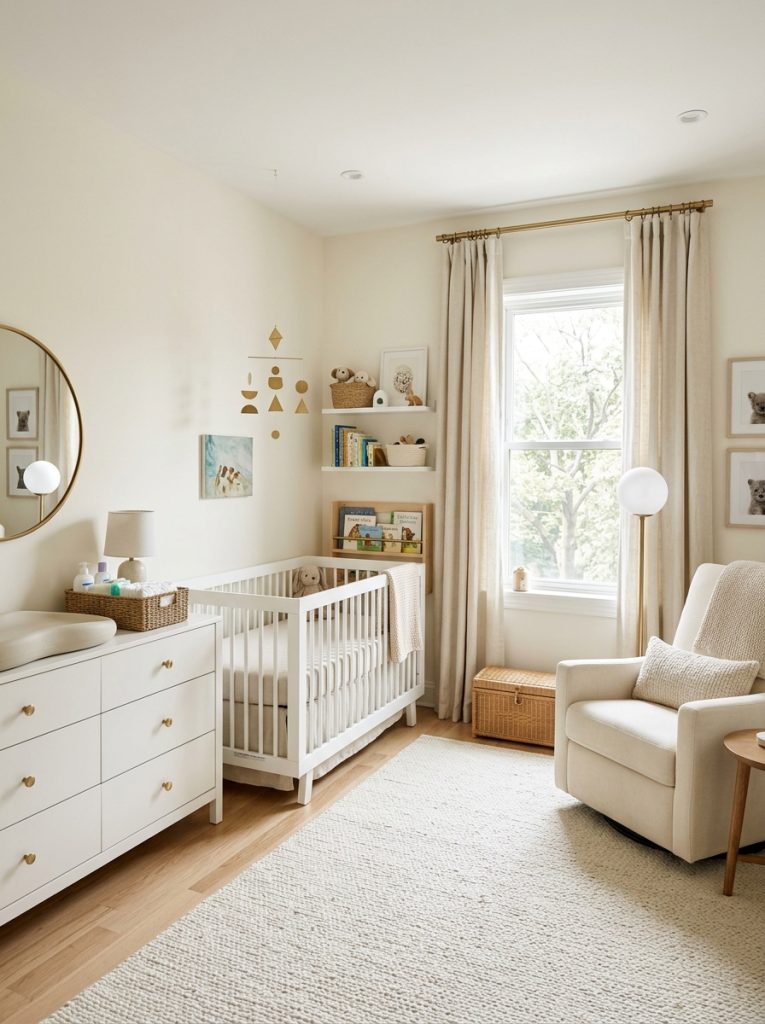
A creamy off-white color scheme paired with brushed brass hardware creates a bright, airy nursery with subtle touches of warmth and sophistication. Paint all room walls in a soft, luminous off-white shade that bounces natural light efficiently throughout the space. Select a conversion crib and matching changing dresser in a clean white finish, upgrading standard cabinet knobs with brushed brass hardware. Install a sleek brass curtain rod above windows, hanging unbleached linen drape panels that brush the floor surface neatly. Position a plush cream glider chair in the corner, accompanied by a brushed brass floor lamp with an frosted globe diffuser for soft evening feedings. Mount minimal wall shelves supported by subtle brass brackets to hold classic children books and small ceramic decor pieces. This bright, minimalist style approach creates a clean, organized room that feels open, pristine, and effortless to update as your child grows into toddlerhood.
Idea 8: Soft Charcoal and Driftwood Wooden Details
How to Make
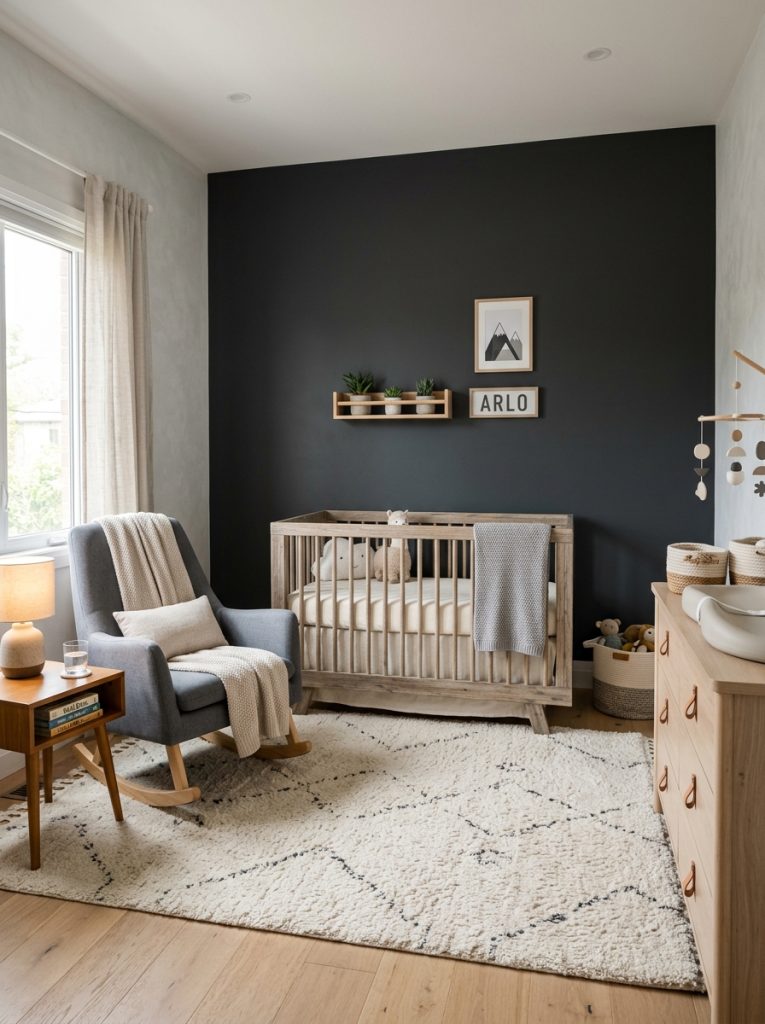
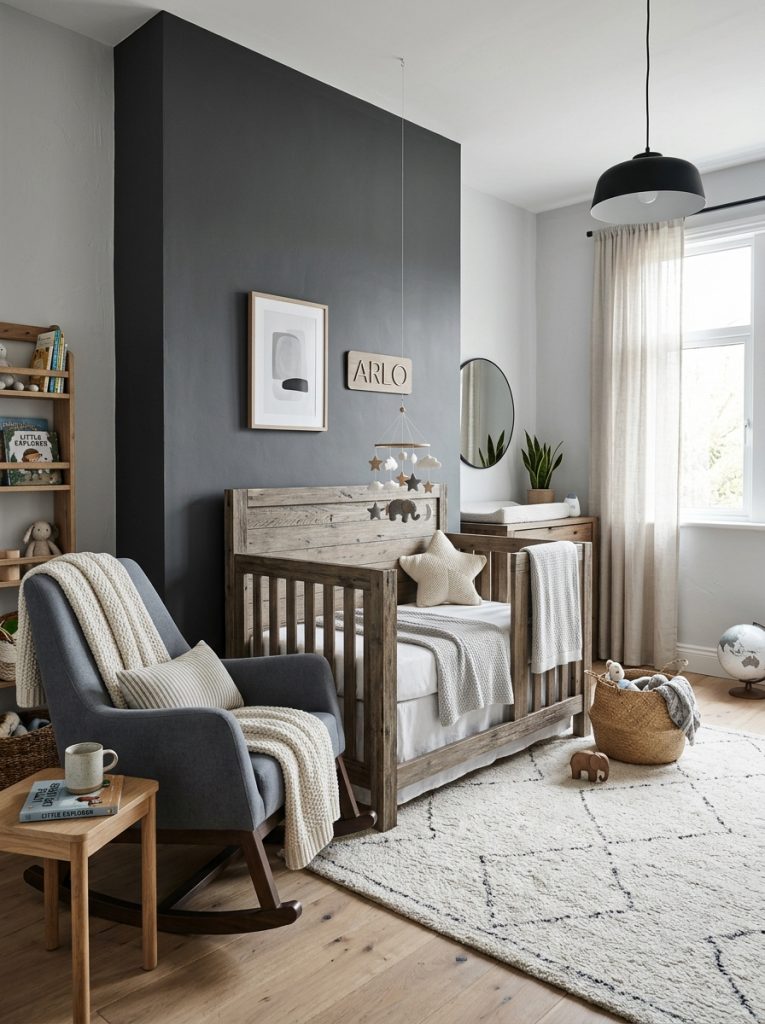
Combining deep charcoal accents with light driftwood finishes offers a sophisticated contrast while maintaining a completely neutral, gender-neutral palette. Paint three walls in a crisp pale gray and select the main wall for a soft charcoal gray shade that adds depth. Position a crib crafted from light, weathered driftwood timber against the charcoal wall to showcase the contrasting wood grain textures clearly. Install light-colored wooden laminate or hardwood flooring, softening the surface with a large, plush cream area rug featuring subtle charcoal geometric lines. Choose a dark slate or charcoal upholstered rocking chair, styling it with a cream knit cushion to maintain light-and-dark balance. Mount floating driftwood shelves on adjacent walls to display canvas storage bins, minimalist framed sketches, and simple wooden toys. This approach introduces modern architectural contrast into the nursery without introducing bright saturated colors, achieving a sleek, grounded, and functional living space.
Idea 9: Earthy Sand and Woven Basket Storage Haven
Execution Process
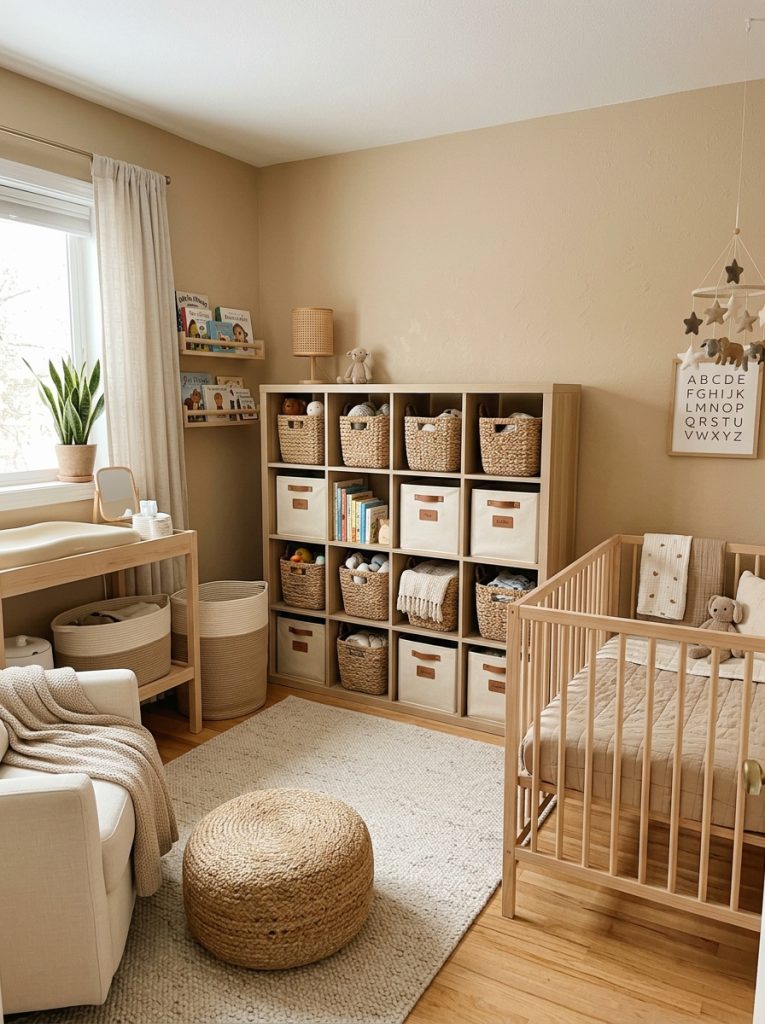
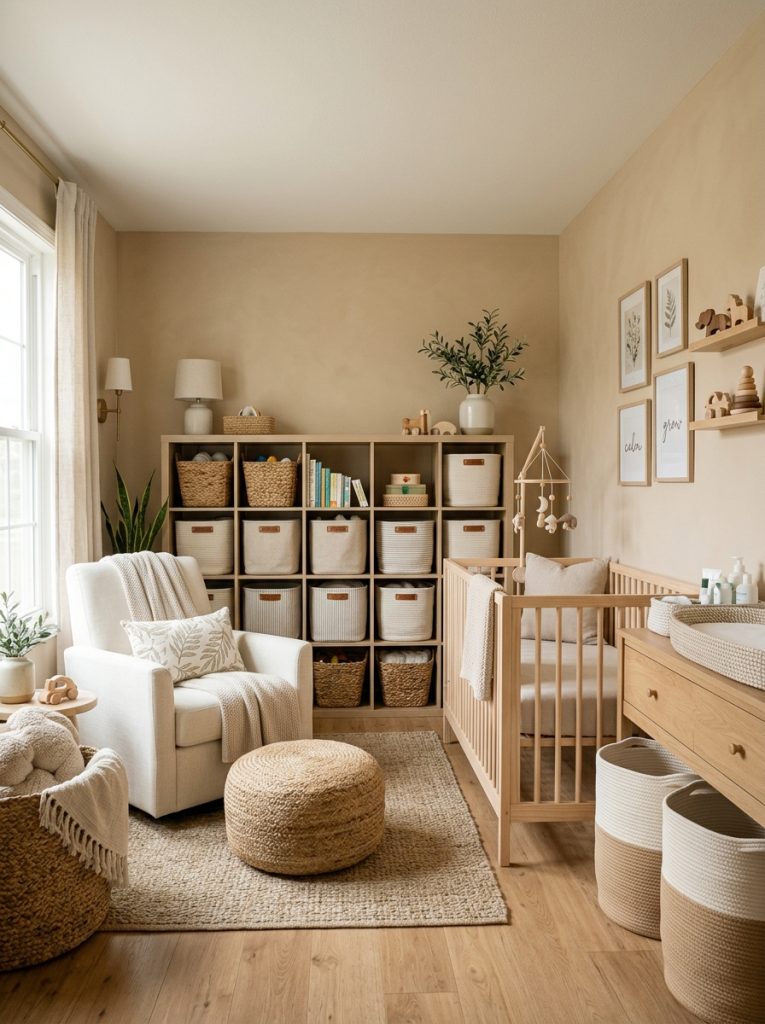
Prioritizing natural textures and extensive storage solutions allows an earthy sand-colored nursery to remain stylishly organized and exceptionally practical. Paint the room in a warm sand tone, creating a neutral backdrop that feels cozy, warm, and bright throughout the day. Set up a modular white or light oak storage unit along one wall, filling lower cubbies with matching woven seagrass storage baskets. Place a clean natural wood crib on the opposite wall, styled with a soft beige fitted sheet and an organic cotton bumperless mattress setup. Utilize woven rope hampers and wall-mounted basket pockets near the changing station to store diapers, wipes, and swaddles within arm reach. Anchor the seating zone with an ivory armchair and a round woven ottoman that doubles as hidden footrest storage. This texture-rich arrangement keeps clutter fully hidden while establishing a cohesive, handmade feel that simplifies daily organization and maintenance routines for busy parents.
Idea 10: Warm Ivory and Layered Monochromatic Geometry
How to Create
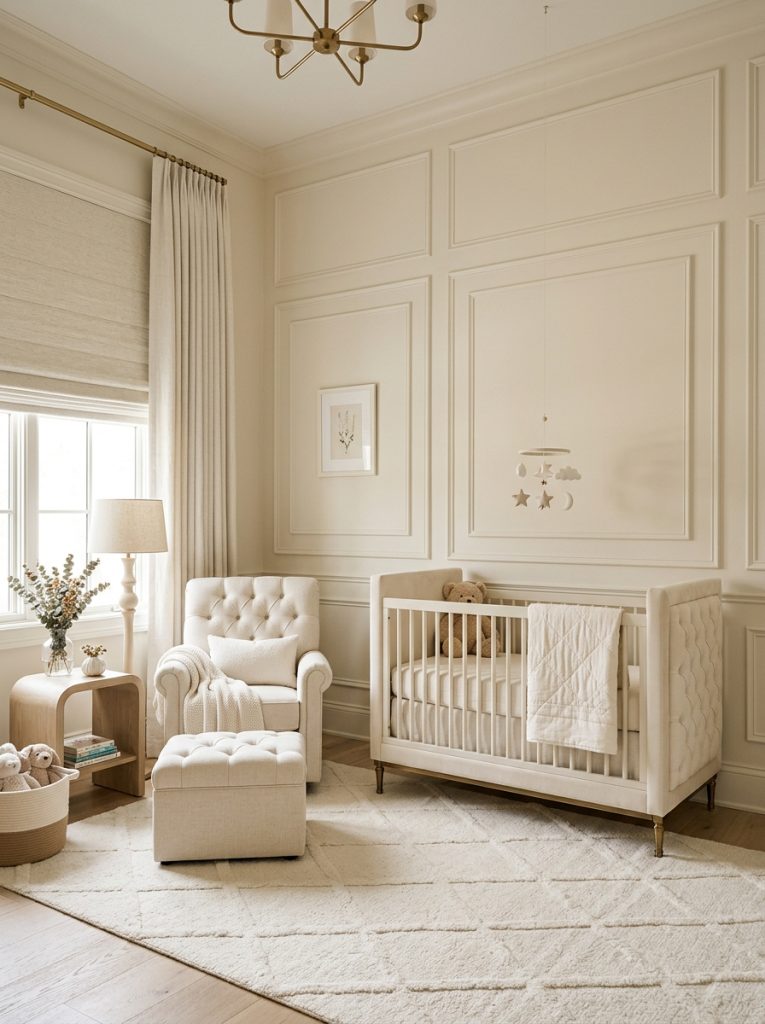
Monochromatic design relies on subtle geometric shapes and varying shades of warm ivory to build visual interest without color overload. Paint the entire room in a soft ivory shade, adding thin wall molding trim arranged in rectangular geometric frames for subtle surface relief. Choose an ivory upholstered crib or a minimalist white wooden frame that aligns with the geometric paneling along the back wall. Select an ivory area rug featuring a low-relief carved diamond pattern to add subtle geometric texture across the floor surface. Style the window with layered window treatments, combining structured ivory Roman shades with soft linen drapery panels. Place a tailored ivory glider in the corner, accented by a cream throw pillow with subtle tufted grid detailing. Install floating white ledges inside the wall molding frames to hold minimalist monochrome book covers, creating an elegant, highly structured environment that feels luxurious, serene, and remarkably timeless.

Common Beginner Mistakes and How to Avoid Them
When designing a neutral boy nursery, beginners often make the mistake of relying on a single shade of beige or white, which can leave the room feeling flat, cold, or unfinished. To prevent a monotonous look, intentionally layer at least three distinct neutral tones alongside varying material textures like wool, linen, raw wood, and matte metals. Another frequent error is selecting furniture pieces based solely on appearance without verifying precise room dimensions and functional circulation paths. Always draft a scaled floor plan to ensure the crib, changing station, and nursing chair do not obstruct doors, windows, or storage access. Additionally, over-decorating wall surfaces early in the planning process can quickly visually clutter a small room. Focus on establishing core furniture placement and primary lighting setup first, slowly introducing decorative accents, floating shelves, and wall art only after the primary functional layout is completely assembled and tested for daily convenience.
Practical Tips for Better Results
Achieving a high-end, cohesive result in a neutral nursery requires careful attention to lighting, material durability, and functional zoning. Install dimmable lighting controls or multi-setting lamps near the nursing chair and changing station to maintain a calm environment during late-night care routines. Select washable, stain-resistant fabrics for all large upholstered items, as light neutral tones require practical protection against daily wear. When applying paint, purchase sample pots and test shades directly on different walls to observe how morning and evening natural light alters the color tone. Maintain a consistent wood tone across your major furniture pieces, matching oak with oak or pine with pine to prevent visual mismatching. Layering a smaller, machine-washable accent rug on top of a larger natural jute carpet offers both comfortable padding and easy cleaning capabilities. These practical, step by step design adjustments elevate the overall aesthetic while preserving the room long-term functionality.
Styling, Presentation, or Organization Ideas
Effective organization is critical in a neutral nursery to maintain its clean, serene visual appeal over time. Utilize closed storage solutions, such as fabric-lined woven baskets, shallow drawer dividers, and canvas bins inside closets, to keep smaller items hidden from plain view. Group daily changing supplies into a portable caddy painted in a matching neutral shade, allowing easy transport while keeping surfaces clutter-free. Arrange children picture books on low floating ledges by cover tone or simple minimalist themes, turning functional items into subtle decorative wall accents. Use uniform coat hangers inside the wardrobe to create a neat, visual order when doors are opened. Position floor baskets near the nursing glider for quick containment of plush toys and extra swaddle blankets. By assigning a dedicated, concealed home to every baby essential, you preserve the peaceful, minimalist style atmosphere of the nursery without sacrificing fast accessibility during busy daily routines.
Budget or Time Planning
Creating a stylish neutral nursery does not require an excessive financial investment or a complex construction timeline when planned strategically. Allocate the primary portion of your budget toward high-use, long-term furniture items, specifically a safety-certified crib and a comfortable, ergonomic nursing glider. Save on decorative elements by undertaking simple DIY wall projects, such as painting a color-blocked arch or installing basic wooden picture ledges yourself. Establish a four-week project timeline: dedicate week one to room measuring, color planning, and ordering core furniture; week two to wall painting and floor preparation; week three to furniture assembly and lighting installation; and week four to organizing storage bins and styling textiles. Shopping for neutral decor items at general home goods stores rather than specialized nursery boutiques often yields significant cost savings. Spreading purchases across your planning period prevents budget strain while ensuring every item fits your overarching aesthetic theme seamlessly.
Creative Expansion and Advanced Inspiration
As your child transitions from infancy into toddlerhood, a well-designed neutral nursery offers an effortless foundation for creative expansion. Convert the central crib into a toddler daybed using compatible conversion rails, keeping the surrounding neutral wall finishes and main rug completely intact. Introduce interactive, age-appropriate elements such as a low wooden activity table, a canvas play teepee, or framed educational wall prints featuring simple neutral illustrations of animals or alphabets. You can easily incorporate temporary accent colors through small accessories like throw pillows, bedsheets, or storage baskets without needing to repaint walls or replace major furniture. Consider adding a wall-mounted pegboard painted in a complementary neutral shade to hang wooden toys, art supplies, and small display shelves dynamically. This adaptable approach demonstrates the true value of neutral nursery design, ensuring your initial creative project evolves naturally alongside your growing child for years to come.