10 Nursery Ideas Boy Vintage
Designing a vintage boy nursery allows parents to combine timeless aesthetic charm with modern functionality to create a warm, welcoming space. Trending Pinterest ideas frequently feature vintage themes because they blend classic architectural elements, nostalgic decor, and muted color palettes that never go out of style. In this comprehensive guide, you will learn practical steps to design a vintage nursery using antique accents, classic wooden furniture, and muted color schemes. This article explores creative ideas that highlight aged brass fixtures, retro wall treatments, and traditional textiles without sacrificing safety or convenience. Adopting a vintage design scheme ensures your nursery remains versatile, budget friendly, and easy to adapt as your child grows. By incorporating structured planning and smart organization, you can transform any spare bedroom into a cozy, memorable sanctuary that supports both daily infant care routines and classic aesthetic design principles for your home.
Why This Idea Is Trending or Useful
Vintage boy nursery concepts are remarkably popular in modern home decor because they prioritize character, sustainability, and lasting visual appeal over short-lived trends. Instead of buying all-new modern sets, parents can repurpose heirloom items, vintage toys, and classic timber furniture to build a unique environment. This design philosophy holds strong practical value for families seeking sustainable interior choices while keeping project costs under control. Furthermore, vintage styling offers immense DIY appeal and high accessibility for beginners, as working with distressed wood and antique tones naturally forgives minor painting or crafting imperfections. Classic shades of dusty blue, warm ochre, dark forest green, and rich mahogany add depth, making small nursery rooms feel inviting and structured. By focusing on durable materials, nostalgic wall decor, and tailored organization, vintage nursery trending ideas deliver an ideal balance of practical utility, personal charm, and timeless elegance.
Materials and Preparation
Proper preparation and accurate planning form the essential base for any successful vintage home decor project. Begin by measuring the dimensions of the room, noting natural light sources, doorways, and electrical outlets to optimize furniture placement and flow. Gather core preparation tools, including painter tape, high-grade wall primer, measuring tapes, spirit levels, and non-toxic interior wall paint in low-VOC formulas. For materials, focus on acquiring durable items such as solid wood dressers, brass curtain hardware, cotton plaid bedding, and woven storage baskets. Before applying fresh paint or hanging antique wall frames, clean all surfaces thoroughly and repair any minor wall cracks with spackling paste. Establishing a clear budget, selecting a consistent vintage color palette, and creating a step by step schedule will prevent unexpected delays during room setup. Thorough preparation guarantees a smooth execution process while maintaining a safe, healthy nursery environment for your baby.
Main Ideas Section
Idea 1: Dusty Blue Walls with Classic Dark Wood
Step-by-Step Guide
Creating an authentic vintage nursery starts with applying a muted dusty blue paint color across all primary room walls to establish a calm, historic atmosphere. Position a solid dark walnut or mahogany crib along the main wall, styling it with crisp white or cream organic cotton bedding. Introduce floor-length velvet window drapes in a deep navy shade, hanging them from a sturdy dark wood curtain rod to enhance room height and light control. Place a traditional leather or dark fabric rocking chair in a corner, pairing it with a small vintage side table for nursing supplies. Mount floating wooden shelves crafted from reclaimed timber above the dresser to display classic storybooks and antique wooden toys. Layer the floor with an oriental-style vintage runner rug featuring subtle blue and cream patterns to add tactile warmth underfoot. Finish the setup with soft, warm-lighting fixtures that highlight the deep wood grains, creating a balanced, beginner friendly room layout that feels cozy, elegant, and highly functional.
Idea 2: Retro Aviation Theme with Antique Brass Accents
Setup Method
A retro aviation theme brings an adventurous vintage aesthetic into the nursery while preserving a clean and organized design layout. Paint the walls in a soft parchment or warm ivory tone that serves as a neutral canvas for historic decor elements. Position a simple mid-century iron or brass crib as the primary focal point, dressing it with subtle sky-blue fitted sheets. Mount an antique brass ceiling fan or a vintage-inspired brass light fixture to anchor the overhead space with warm metallic shine. Secure a floating wooden ledge above a classic wooden dresser to display detailed model propeller airplanes made of aged tin or wood. Frame vintage aviation blueprints or historical flight maps in thin brass frames and hang them symmetrically on an adjacent wall. Add a distressed leather ottoman near the glider chair to provide both seating support and subtle texture. This practical setup produces an easy project that feels nostalgic, tailored, and visually engaging.
Idea 3: Vintage Woodland Animals with Distressed Furniture
How to Make
Incorporating a vintage woodland animal theme offers a gentle, nature-inspired nursery concept grounded in muted earth tones and distressed furniture finishes. Apply a warm beige or soft taupe paint color to all four walls to build a quiet, cohesive backdrop throughout the room. Select a crib featuring a distressed white or light gray milk-paint finish, giving the wood an authentic aged appearance without compromising safety. Hang framed antique botanical prints depicting forest animals like foxes, deer, and owls in matching dark wood frames above the changing station. Place a comfortable upholstered rocker chair draped with a chunky cable-knit cream throw blanket near the window for evening routines. Integrate woven seagrass storage trunks along the floor plane to organize extra blankets, plush toys, and nursery supplies efficiently. Choose a flat-weave wool area rug in muted olive and sage tones to complete this earthy, beginner friendly look while maintaining an organized, comfortable layout.
Idea 4: Heritage Plaid Accent Wall and Brass Sconces
Execution Process
Installing a heritage plaid accent wall introduces classic structure and warmth to a vintage boy nursery without visually crowding the floor space. Measure the chosen focal wall accurately before applying a high-quality removable wallpaper featuring a subtle muted green, blue, and cream tartan pattern. Keep the surrounding three walls painted in a solid off-white or cream tone to ensure the wall pattern remains the visual highlight. Position a traditional dark-finished crib directly against the plaid backdrop, allowing the geometric lines of the wallpaper to frame the furniture frame neatly. Install a pair of hardwired or plug-in antique brass wall sconces with pleated fabric shades on either side of the crib for soft, indirect night lighting. Complement the heritage aesthetic by placing a dark oak changing dresser opposite the crib, topped with a contoured pad and organized brass caddies. This balanced method delivers a refined, easy project with long-lasting visual appeal.
Idea 5: Mid-Century Traditional Oak with Striped Wallpaper
How to Create
Combining mid-century oak furniture with vintage ticking-stripe wallpaper establishes a clean, structured room design that feels both historical and timeless. Apply vertical ticking-stripe wallpaper in soft gray and cream across the room to visually elevate low ceiling heights. Position a mid-century tapered oak crib along the main wall, paired with a matching oak tall boy dresser for ample garment storage. Frame classic vintage sport pennants or retro illustrations in simple oak frames, arranging them in a clean gallery grid above the dresser. Install a low-profile brass lighting fixture overhead to complement the warm oak tones spread across the room layout. Place a plush cream wool rug beneath the crib to soften the hardwood flooring and absorb ambient sound during naptime. Keep window treatments simple with off-white linen Roman shades, ensuring the room receives plentiful natural light while maintaining an uncluttered, modern design balance rooted in traditional charm.
Idea 6: Antique Nautical Map Gallery and Deep Olive Tones
Step-by-Step Guide
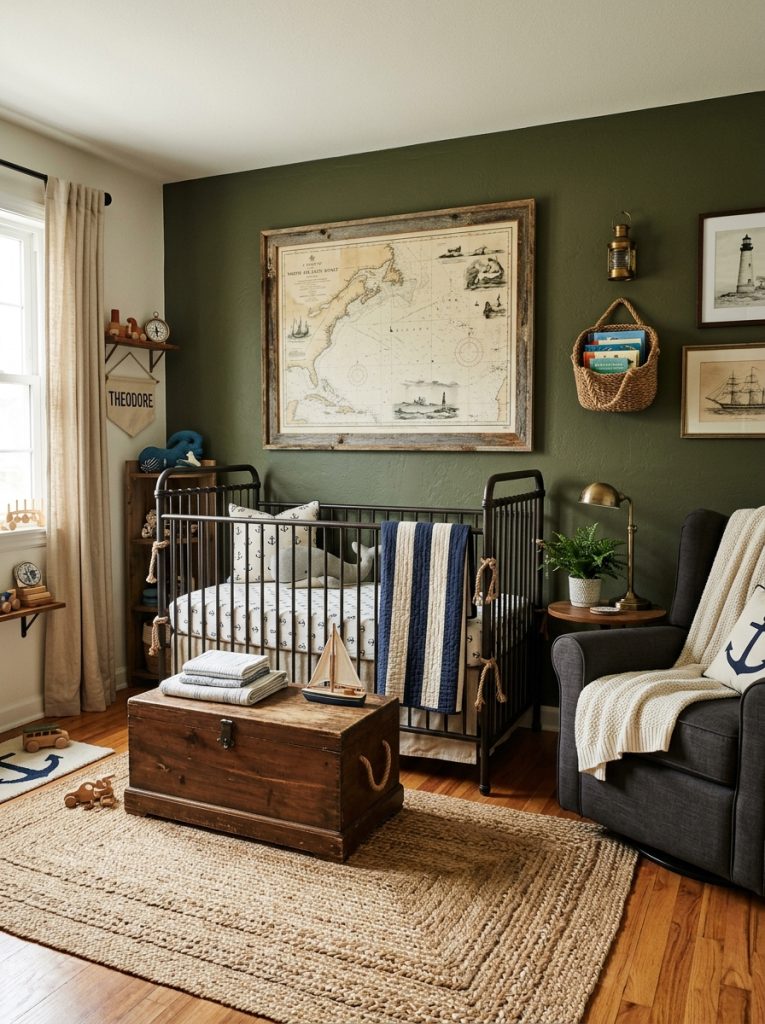
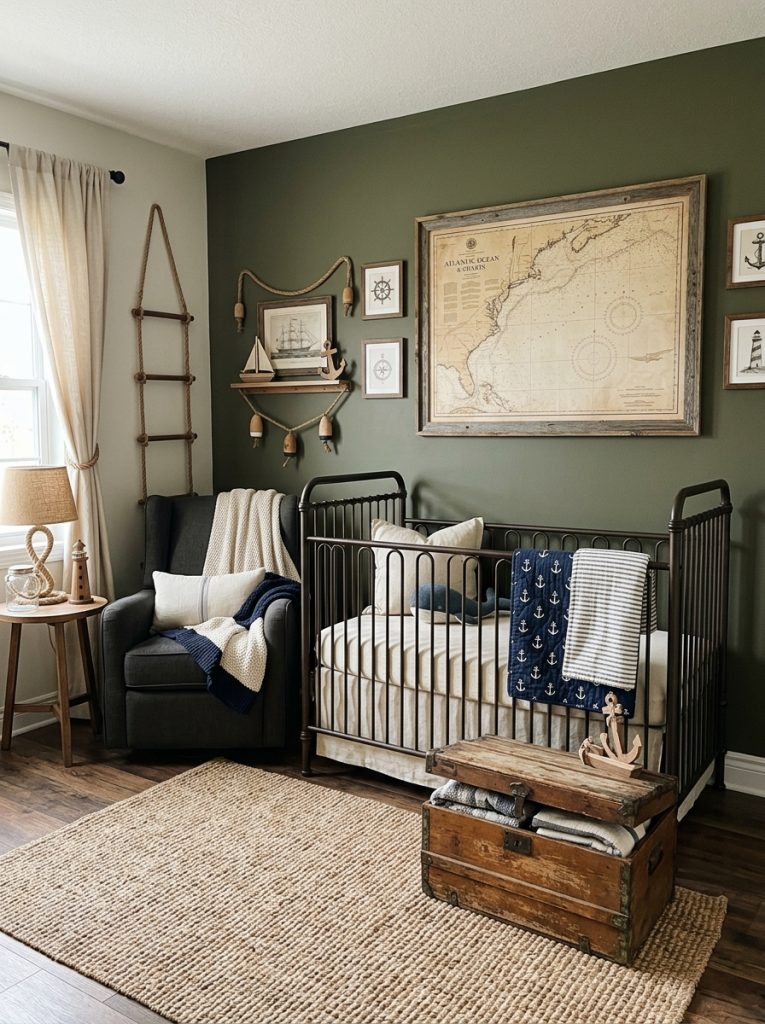
Designing a vintage nautical nursery relies on rich olive green wall tones paired with historical maritime cartography and natural rope textures. Paint a feature wall behind the crib in a deep, muted olive shade while keeping adjacent walls a soft sand color. Hang a large framed vintage nautical map print centrally over the crib, choosing a distressed wooden frame that highlights the antique paper tones. Select an iron or dark metal spindle crib to mimic traditional vintage craftsmanship, dressing it with plain ivory cotton sheets. Place a natural jute area rug over the floor, anchoring a dark green or charcoal upholstered glider chair in the corner. Position a classic wooden storage chest at the foot of the crib to store extra bedding while doubling as a surface for storybooks. Utilize natural rope-wrapped basket hampers for laundry and toy storage, creating a structured, aesthetic space that feels grounded, classic, and simple to set up.
Idea 7: Traditional Bookshelf Nook with Retro Toys
Setup Method
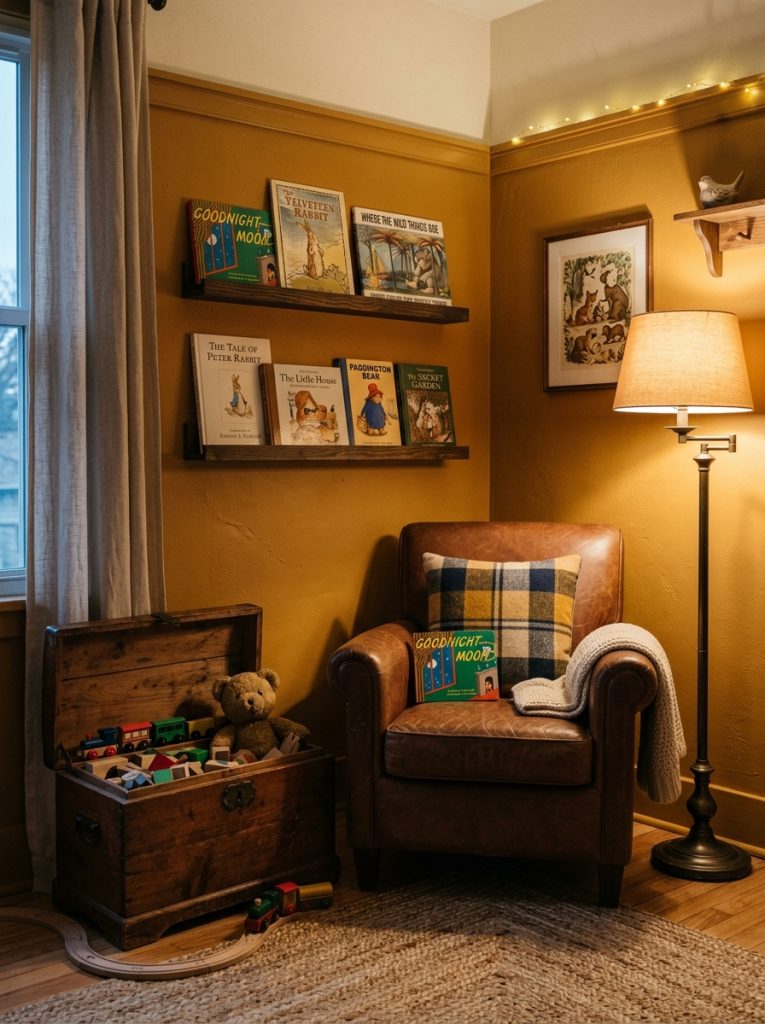
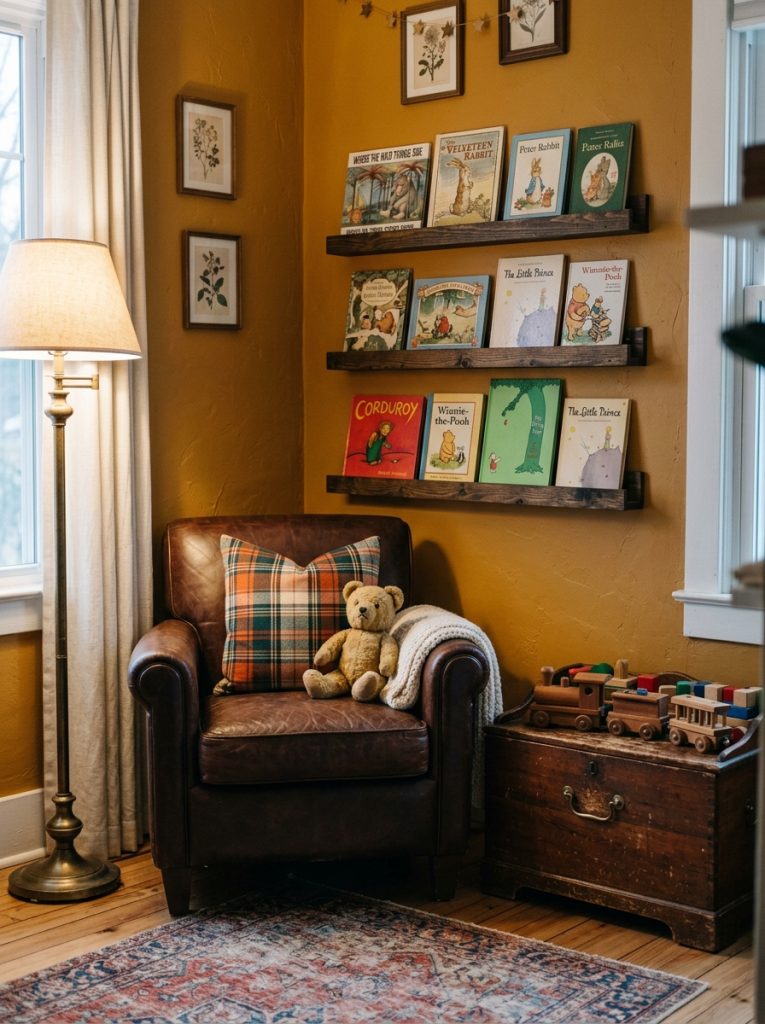
Transforming an unused corner into a dedicated vintage reading nook creates a functional, nostalgic feature within the nursery layout. Install low-mounted, dark stain wooden picture ledges along the corner walls, placing vintage-style children storybooks facing outward for easy access. Position a comfortable leather or velvet armchair adjacent to the shelving unit, styled with an antique plaid accent pillow. Set up a small vintage wooden toy chest nearby, holding classic wooden trains, tin spinning tops, and handmade stuffed animals. Paint the reading nook area in a warm ochre or muted mustard tone to visually separate the zone from the rest of the neutral room. Place a small vintage brass floor lamp behind the chair to provide clear, targeted illumination for bedtime reading sessions. This practical setup maximizes vertical wall space while building an inviting, creative project that encourages early literacy and organized play in a stylish environment.
Idea 8: Victorian Board and Batten with Muted Sage Paint
How to Make
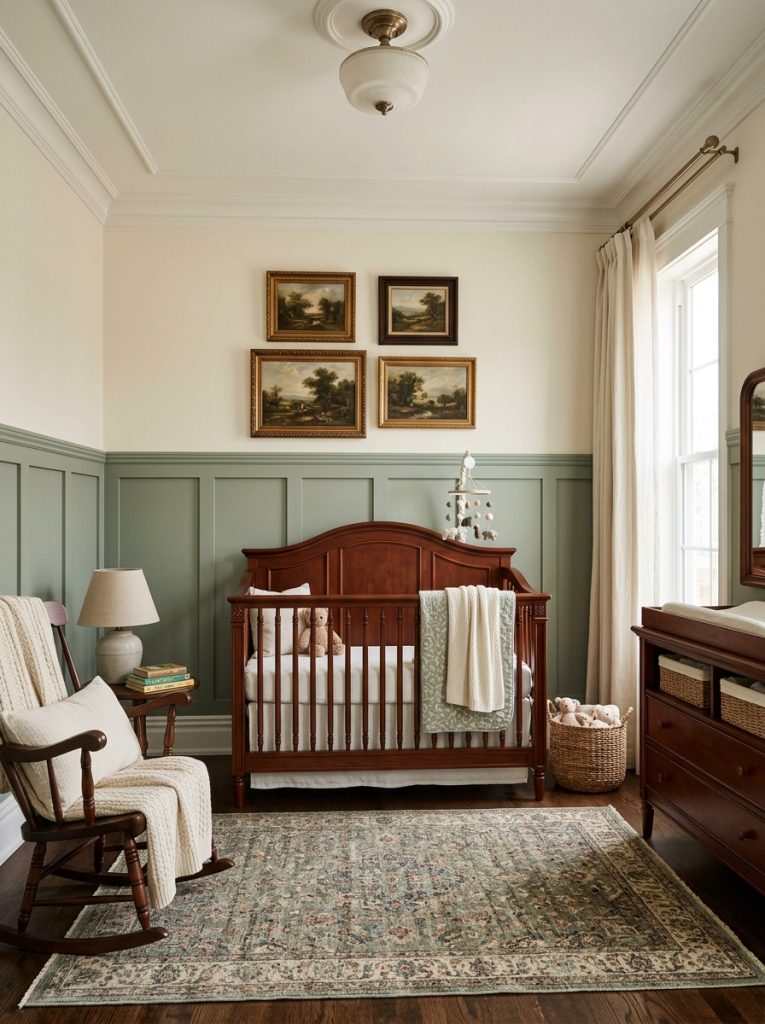
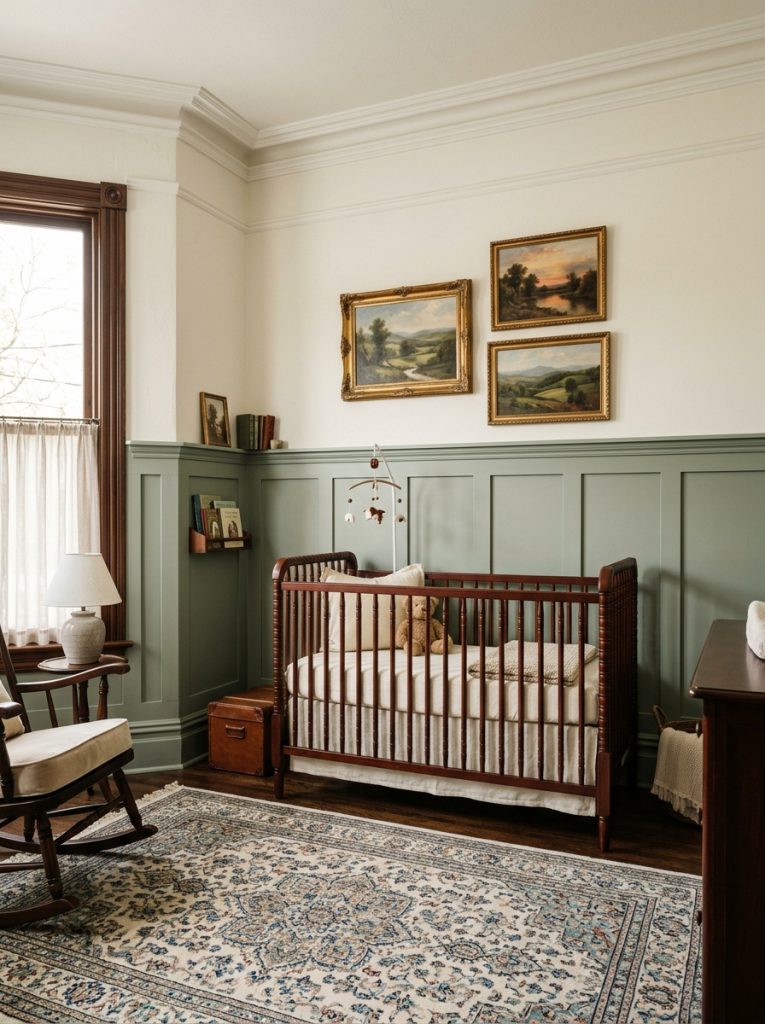
Combining historic Victorian board and batten wall paneling with a calming sage green paint color creates a sophisticated vintage backdrop for a boy nursery. Measure the lower half of all room walls, installing vertical wooden slats and a top chair rail using wood adhesive and finish nails. Fill all nail holes with wood filler, sand the trim smooth, and paint the entire paneling assembly in a rich, muted sage green satin finish. Paint the upper half of the walls in a soft alabaster or cream tone to maintain balance and airiness across the space. Arrange a classic dark cherry wood or walnut crib against the paneled wall to showcase the sharp architectural contrast. Hang vintage framed landscape oil painting reproductions above the chair rail to enhance the fine art aesthetic. Complete the space with a traditional woven wool rug and a matching sage green ottoman for an elegant, highly structured interior look.
Idea 9: Industrial Vintage Iron Furniture with Exposed Brick Wallpaper
Execution Process
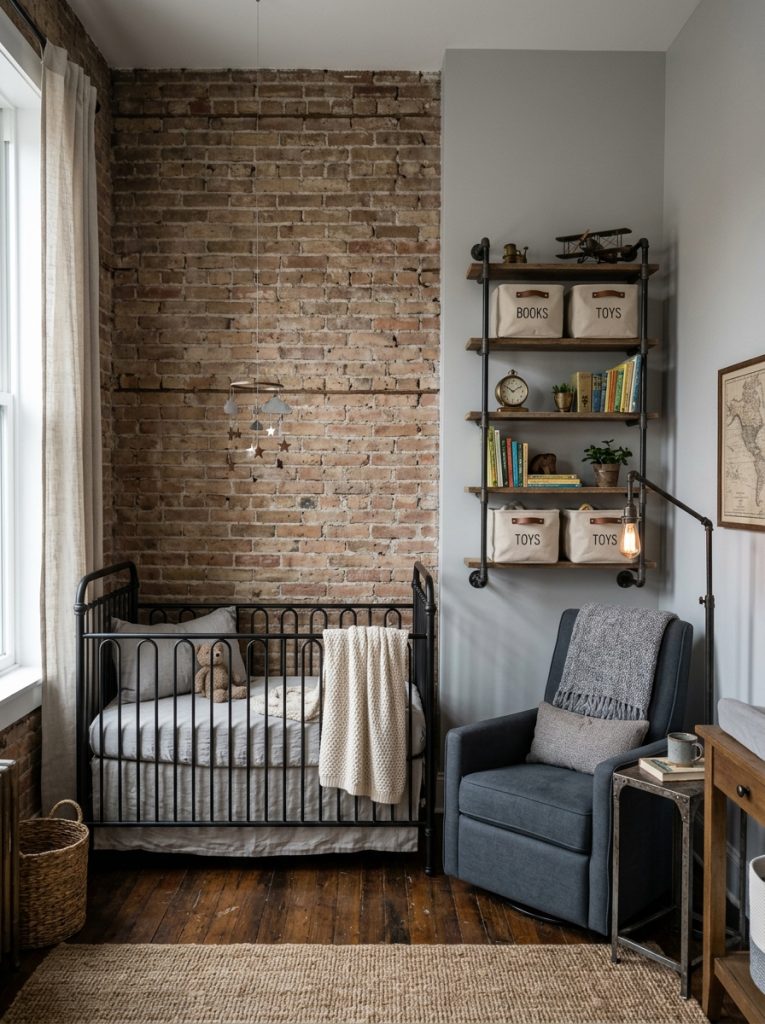
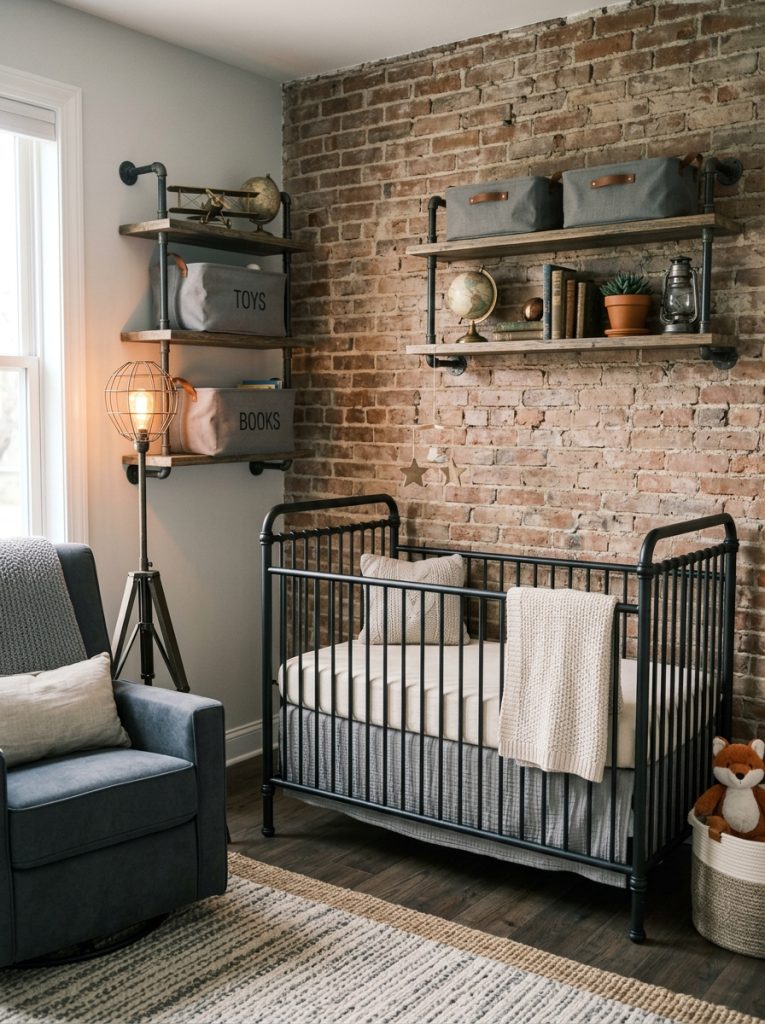
Blending industrial vintage elements like iron metalwork with textured wall surfaces produces a strong, nostalgic design that remains practical for daily use. Apply realistic removable exposed brick wallpaper to a single feature wall to add rich visual texture without heavy construction work. Position a matte black vintage-style iron metal crib against the brick feature wall, dressing it with soft grey and cream cotton bedding. Paint the remaining three walls in a cool light gray tone to balance the heavy industrial textures of the feature wall. Install wall-mounted iron pipe shelving units to hold canvas storage bins, vintage clock decor, and neatly folded swaddles. Place a dark charcoal glider chair in the corner, supported by a floor-standing industrial metal reading lamp with a Edison-style LED bulb. This methodical setup achieves a unique, creative ideas layout that feels sturdy, distinctive, and completely functional for modern parenting routines.
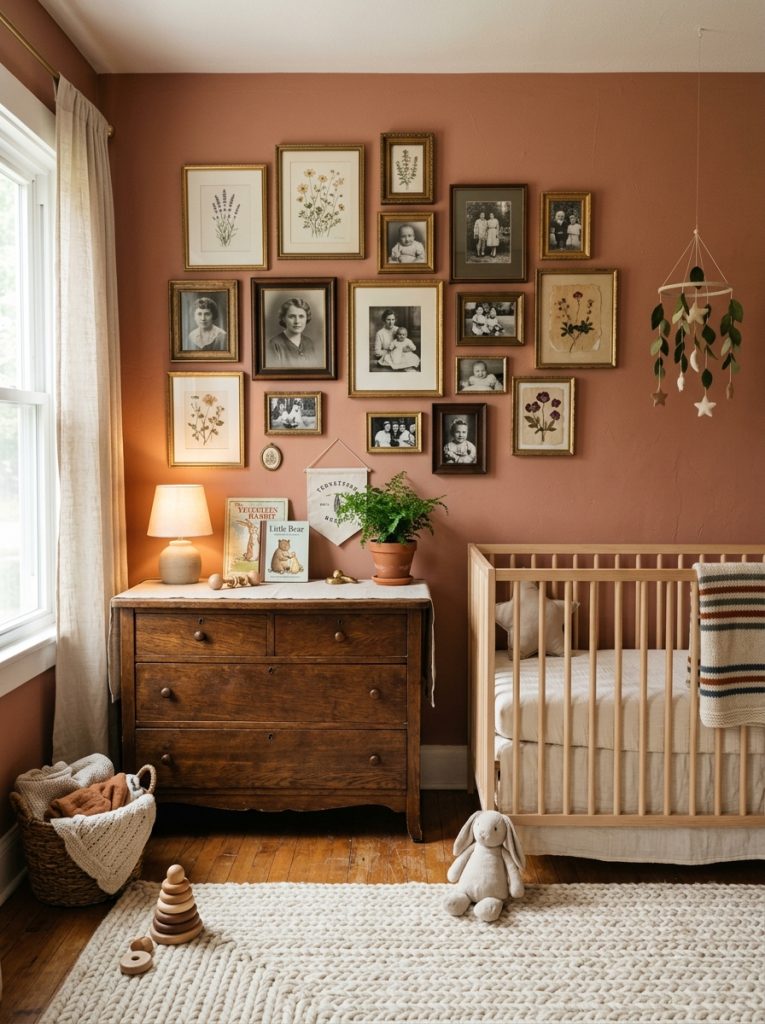
Idea 10: Aged Terracotta Tones with Antique Frame Gallery
How to Create
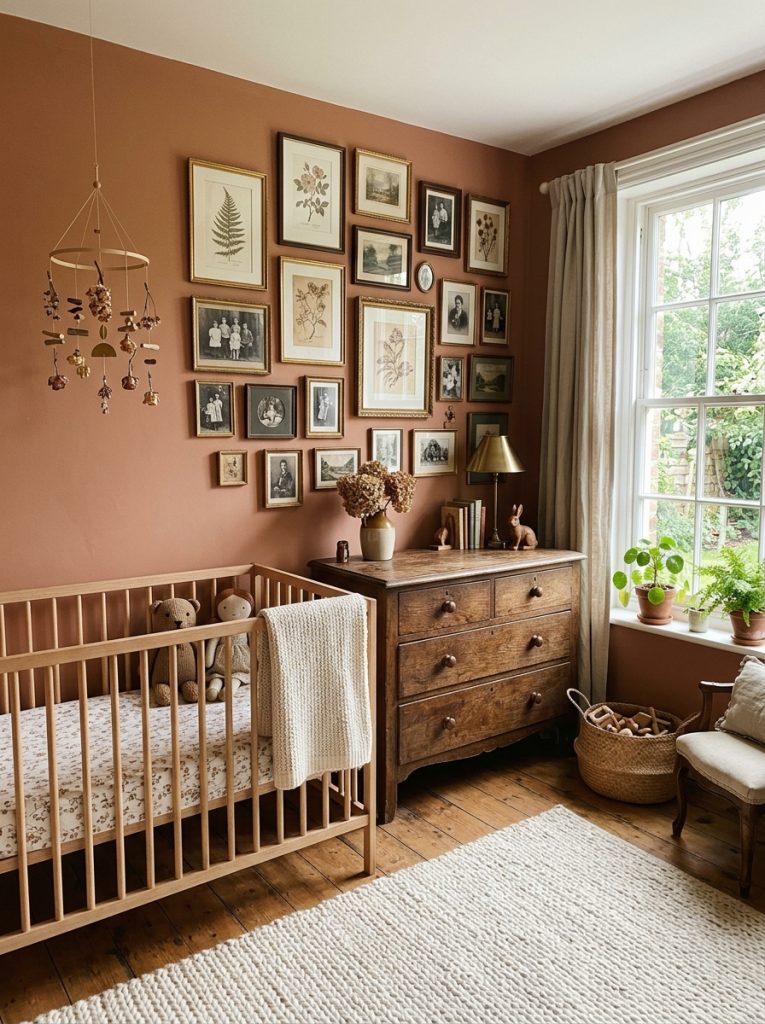
Utilizing warm terracotta paint alongside an asymmetrical gallery wall of antique frames builds a rich, sun-drenched vintage aesthetic inside the nursery. Paint the walls in a muted terracotta or burnt sienna shade, which provides natural warmth and pairs exceptionally well with aged brass and dark wood. Source a variety of thrifted or vintage-inspired picture frames in different sizes, finishing them in antique gold, brass, and dark oak stains. Fill the frames with a mix of vintage family photos, botanical sketches, and classic quotes, arranging them in a gallery grid above a wooden dresser. Position a simple natural wood crib opposite the gallery wall, styling it with unbleached cotton sheets and a woven blanket. Place a cream-colored braided rug on the floor to soften the rich terracotta wall color and lighten the visual plane. This artistic approach yields a cozy, personalized nursery that feels handmade, timeless, and thoughtfully curated.
Common Beginner Mistakes and How to Avoid Them
When designing a vintage boy nursery, beginners often make the mistake of overusing dark furniture and heavy fabrics, which can make the room feel small, dim, and cluttered. To prevent an overly dark environment, balance deep wood stains and dark wall colors with plenty of light-colored textiles, such as cream rugs, white bedding, and light window drapes. Another frequent error is selecting authentic antique cribs or unsafe vintage drop-side models that do not meet current child safety standards. Always purchase a new, safety-certified crib that features a vintage-inspired aesthetic rather than using an actual antique sleeping structure. Additionally, avoid overcrowding wall surfaces with too many small decorative items early in the design process. Focus on placing essential furniture items and establishing primary lighting first, slowly adding curated gallery frames, floating shelves, and nostalgic decor pieces only after the functional layout is fully assembled and tested.
Practical Tips for Better Results
Achieving a polished, cohesive vintage nursery requires careful attention to material safety, lighting layers, and color continuity. Select non-toxic, low-VOC paint formulations and durable, washable fabrics for all upholstery, as light textiles in high-use areas require regular cleaning. Install dimmable switch controls or multi-setting lamps near the nursing chair to maintain a quiet atmosphere during night feedings while preserving the vintage mood. When sourcing vintage decor, inspect metal items for lead paint or sharp edges, opting for vintage-style reproductions when safety is a factor. Maintain color continuity by pulling two or three accent shades from a central rug or wallpaper pattern and repeating them across drapery, storage bins, and wall art. Layering a smaller patterned vintage runner over a larger, plain neutral rug provides both comfortable floor cushioning and easy spot-cleaning capabilities. These practical adjustments elevate the overall design while maintaining high functionality.
Styling, Presentation, or Organization Ideas
Maintaining a clean, organized layout in a vintage nursery is essential for preserving its charming, uncluttered visual appeal. Utilize closed storage solutions, such as fabric-lined wicker trunks, wooden dressers, and canvas bins inside closets, to keep daily clutter out of sight. Group baby changing supplies into a portable vintage-style wire or wooden caddy, allowing easy movement between rooms while keeping surfaces tidy. Display classic children picture books on wall-mounted wooden ledges, using their colorful covers as functional wall art that is easy to update. Utilize uniform wooden hangers inside the wardrobe to create a neat, organized appearance whenever doors are opened. Position large woven floor baskets near the nursing chair for fast containment of extra blankets, swaddles, and plush toys. Assigning a dedicated, concealed space to every baby essential preserves the tranquil, aesthetic atmosphere of the nursery without compromising fast accessibility during busy daily care routines.
Budget or Time Planning
Designing a vintage nursery on a budget is highly achievable when you combine thrifted decor with strategic furniture purchases. Allocate the largest portion of your financial budget toward long-term, safety-certified items, specifically a modern crib with vintage styling and a comfortable, ergonomic nursing chair. Save on decorative accents by sourcing second-hand wooden dressers, frames, and side tables at thrift stores, refinishing them yourself with non-toxic milk paint or stain. Establish a structured four-week project timeline: spend week one measuring the room, choosing your color palette, and ordering core furniture; week two painting walls and completing any wall paneling; week three assembling furniture and hanging window treatments; and week four arranging storage caddies, gallery walls, and textile layers. Spreading tasks across a month prevents rush errors while ensuring your vintage project remains organized, budget friendly, and stress-free from start to finish.
Creative Expansion and Advanced Inspiration
A well-designed vintage boy nursery offers an adaptable foundation that evolves effortlessly as your child grows into toddlerhood and beyond. Convert the central crib into a toddler bed using compatible safety rails, keeping the surrounding vintage wall treatments and dark wood dressers completely intact. Introduce interactive, age-appropriate learning elements such as a small vintage wooden desk, an antique globe, or framed historical maps to foster curiosity and creative play. You can easily update the room theme by swapping out infant bedding and small accessories for vintage sports equipment, classic model trains, or retro travel posters without needing to repaint the main walls. Consider adding a wall-mounted pegboard painted in a complementary olive or navy shade to display wooden toys, hats, and small display shelves dynamically. This long-term approach highlights the true value of vintage design, ensuring your initial creative project transitions naturally into a stylish bedroom.