10 Moody Living Room Ideas With White Walls
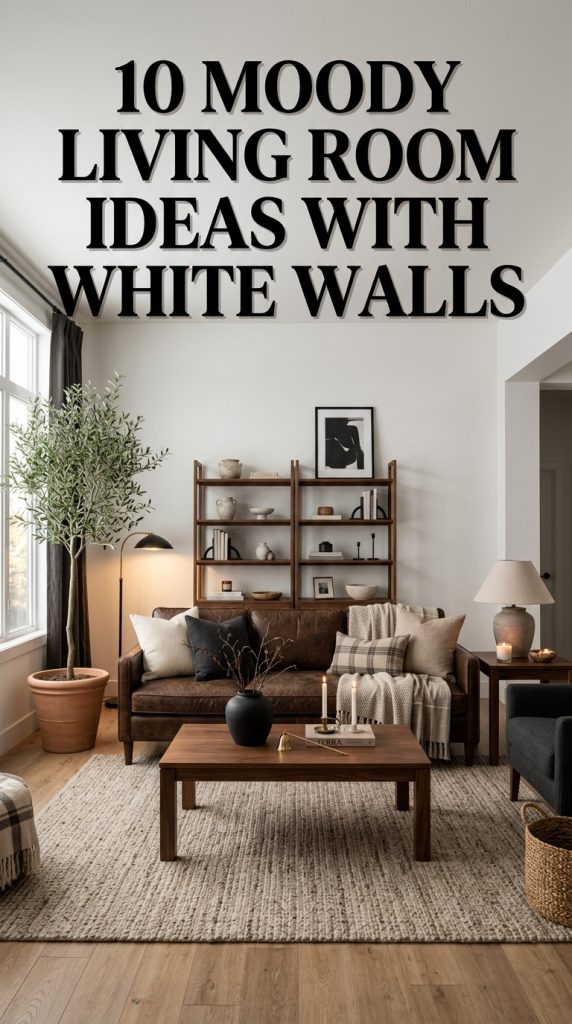
A moody living room does not require dark-painted walls to create depth and character. White walls can provide the perfect backdrop for rich furniture, layered textures, dramatic lighting, and bold decorative accents that define a sophisticated interior. Their clean appearance reflects natural light while allowing darker colors, warm wood finishes, and statement pieces to become the focal points of the room. Pinterest ideas frequently feature white-wall living rooms that combine charcoal sofas, walnut furniture, black metal details, earthy textiles, and indoor greenery to achieve a balanced moody aesthetic. Whether your home follows a modern design, Scandinavian style, industrial influence, or rustic farmhouse theme, white walls offer exceptional flexibility. This guide presents ten practical and beginner-friendly ideas that demonstrate how to transform a bright living room into a warm, inviting, and elegant space without repainting the walls.
Why Moody Living Rooms With White Walls Are Trending
White walls remain popular because they make living rooms appear larger while providing a neutral foundation for creative decorating. Pinterest inspiration increasingly highlights interiors that achieve a moody atmosphere through furniture, lighting, artwork, and layered materials rather than dark wall colors alone. This approach is especially useful for apartments, rental homes, and small spaces where painting may not be practical. White walls also allow seasonal decorative updates without requiring major renovations. Rich wood furniture, dark upholstery, textured fabrics, and carefully selected accessories create visual depth while preserving the brightness that homeowners appreciate. The combination of flexibility, affordability, and timeless appeal has made white-wall moody living rooms one of today’s most searched interior decorating styles.
Materials and Preparation
Begin by selecting a cohesive color palette that complements white walls while introducing darker tones through furniture and accessories. Gather textured throw pillows, knitted blankets, area rugs, framed artwork, table lamps, floor lamps, indoor plants, wooden furniture, ceramic vases, woven baskets, and decorative books. Measure the room carefully before rearranging furniture to maintain comfortable walking paths. Plan lighting locations before placing decorative elements so every seating area receives warm illumination. Choose materials such as linen, velvet, leather, oak, walnut, metal, and woven fibers to introduce layered texture throughout the room. Keeping a consistent palette and balanced furniture layout ensures the living room remains organized, functional, and visually harmonious while achieving a cozy moody atmosphere.
Idea 1: Charcoal Furniture Against White Walls
How to Create
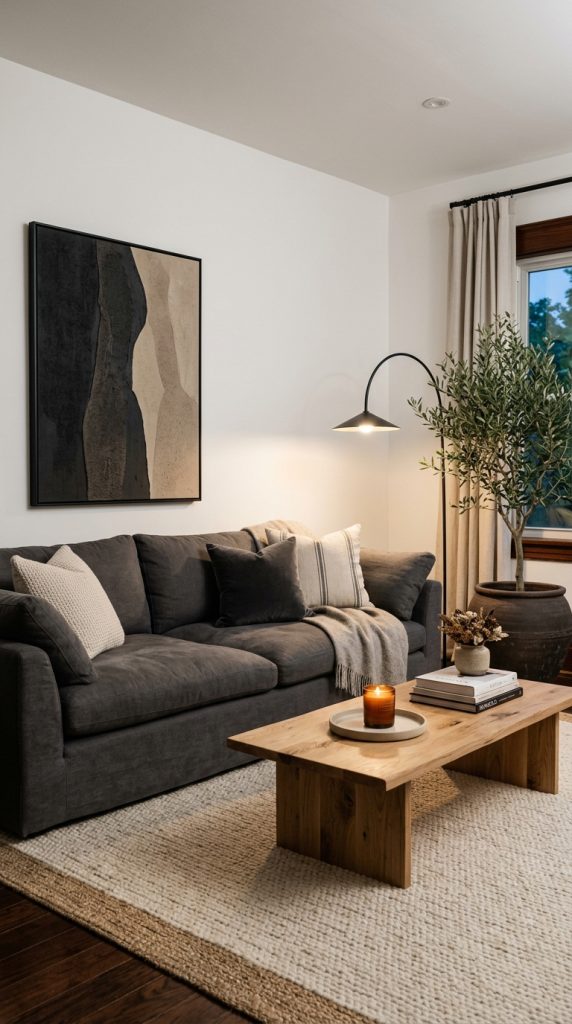
Use white walls as a bright backdrop for a charcoal gray sofa paired with black side tables and a walnut coffee table. Introduce cream and beige cushions to soften the contrast while adding textured knitted throws for warmth. Position a large woven rug beneath the seating arrangement to define the living space and improve comfort. Add black-framed artwork with neutral abstract designs that reinforce the sophisticated color palette. A tall indoor olive tree or fiddle leaf fig introduces natural greenery without overwhelming the room. Warm table lamps positioned beside the sofa provide soft evening lighting that enhances the cozy atmosphere. This balanced arrangement demonstrates how dark furniture alone can establish a moody aesthetic while allowing white walls to maintain brightness and openness.
Idea 2: Walnut Wood and Earthy Decor
Step-by-Step Guide
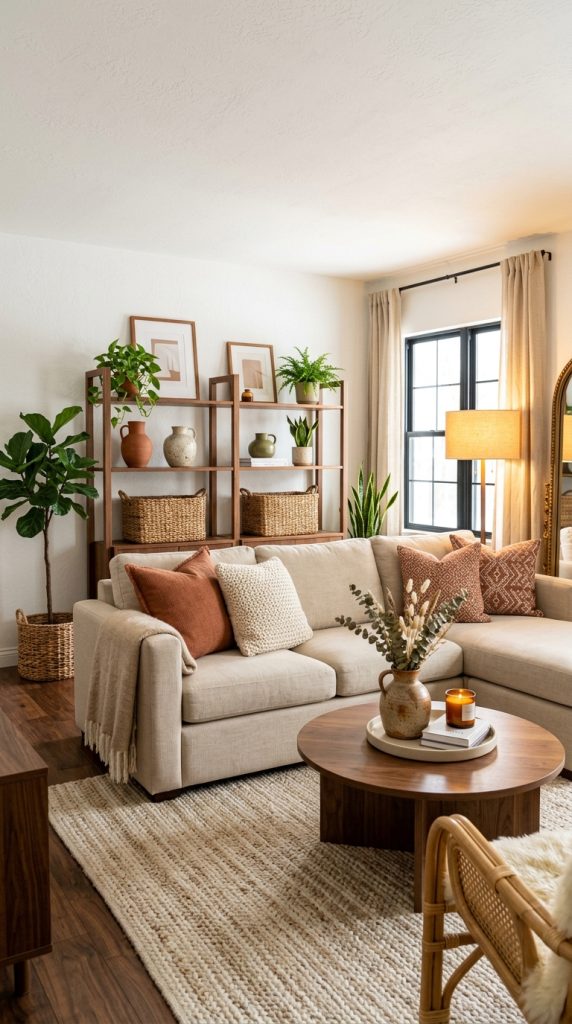
Pair white walls with rich walnut furniture and earthy decorative accents to create a welcoming living room filled with natural warmth. Select a wooden media console, matching coffee table, and floating shelves that coordinate throughout the space. Layer rust-colored cushions, linen throws, woven baskets, and ceramic planters around the seating area to reinforce the earthy palette. Soft beige curtains frame the windows while allowing generous daylight to enter the room. Display books, pottery, and greenery sparingly on shelves to maintain organization. The combination of wood, natural textures, and warm accessories creates depth without reducing the room’s brightness.
Idea 3: Black Accent Furniture
Setup Method
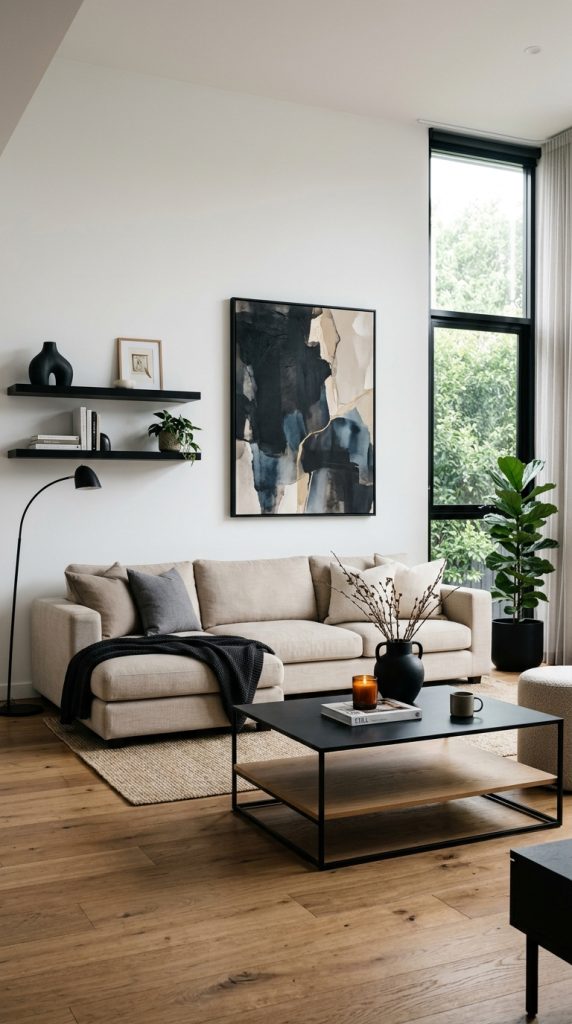
Instead of painting the walls, introduce black furniture pieces that provide dramatic contrast against white surfaces. Choose a black coffee table, slim shelving unit, floor lamp, and picture frames that create visual definition throughout the room. Pair these elements with a light-colored sofa layered with charcoal and beige cushions. Add a textured rug featuring subtle gray patterns that connect the darker furniture with the lighter flooring. Decorative ceramic vases and indoor plants soften the strong contrast while preserving balance. This approach offers a modern design suitable for both compact and spacious living rooms.
Idea 4: Moody Scandinavian Living Room
How to Make
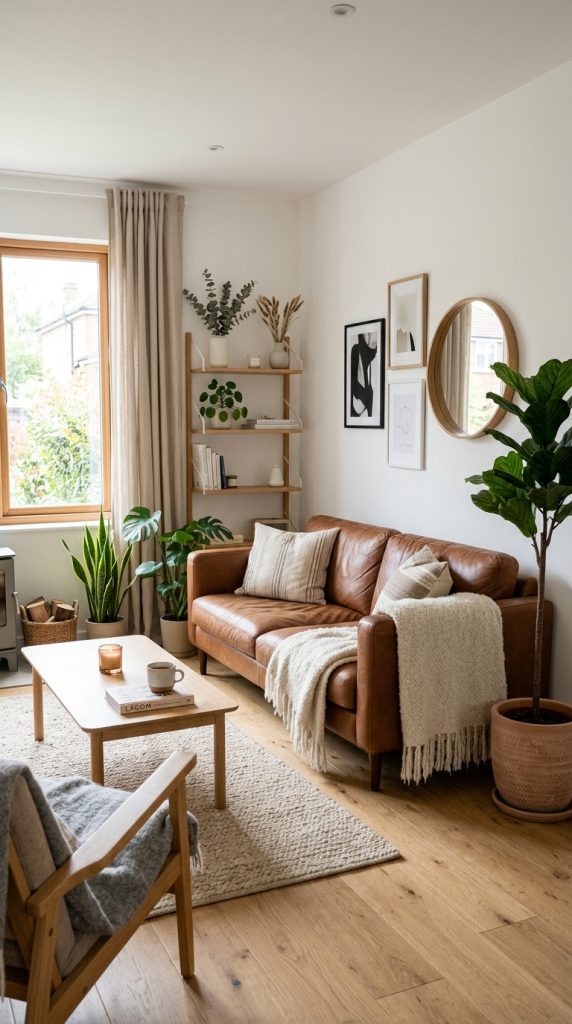
Blend Scandinavian simplicity with moody styling by combining white walls, light oak flooring, and darker furniture accents. Select a charcoal or brown sofa paired with oak side tables and minimalist shelving. Introduce linen cushions, wool blankets, ceramic decorations, and indoor plants that provide texture while maintaining the clean aesthetic. Large windows should remain unobstructed by heavy curtains so natural light enhances the room’s openness. Decorative accessories should remain carefully selected and limited in number to preserve the Scandinavian emphasis on simplicity and organization.
Idea 5: Leather Sofa and Warm Lighting
Execution Process
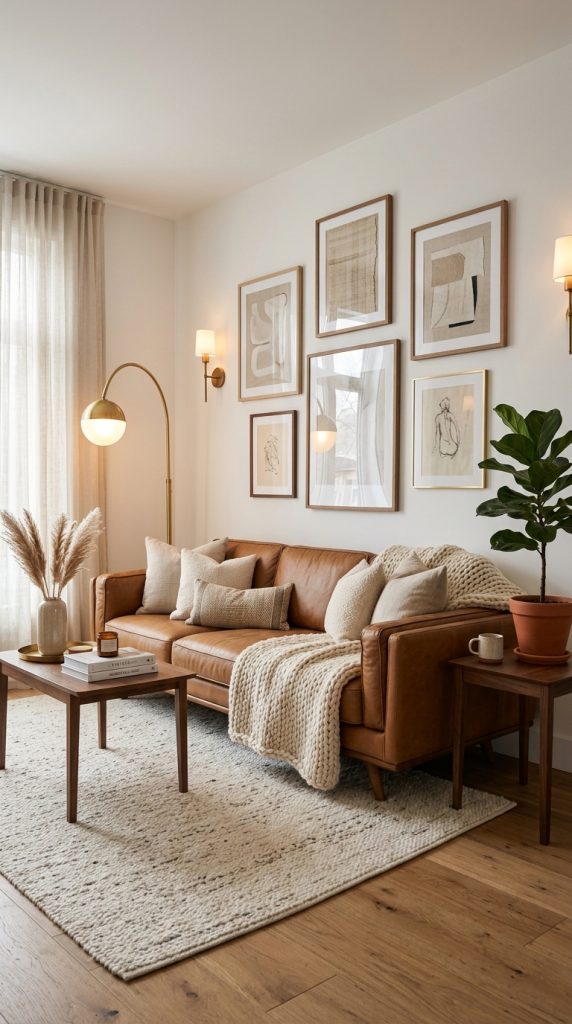
A brown leather sofa creates immediate warmth when placed against crisp white walls. Complement the seating with a wooden coffee table, black metal floor lamp, and woven area rug that reinforces the natural aesthetic. Layer soft beige and rust-colored cushions to add comfort while maintaining the earthy palette. Warm lighting from table lamps and candles highlights the leather texture during the evening. Display framed landscape artwork with muted colors that coordinate naturally with the surrounding furniture. This timeless combination balances brightness and depth without relying on dark paint.
Idea 6: Gallery Wall With Moody Artwork
How to Create
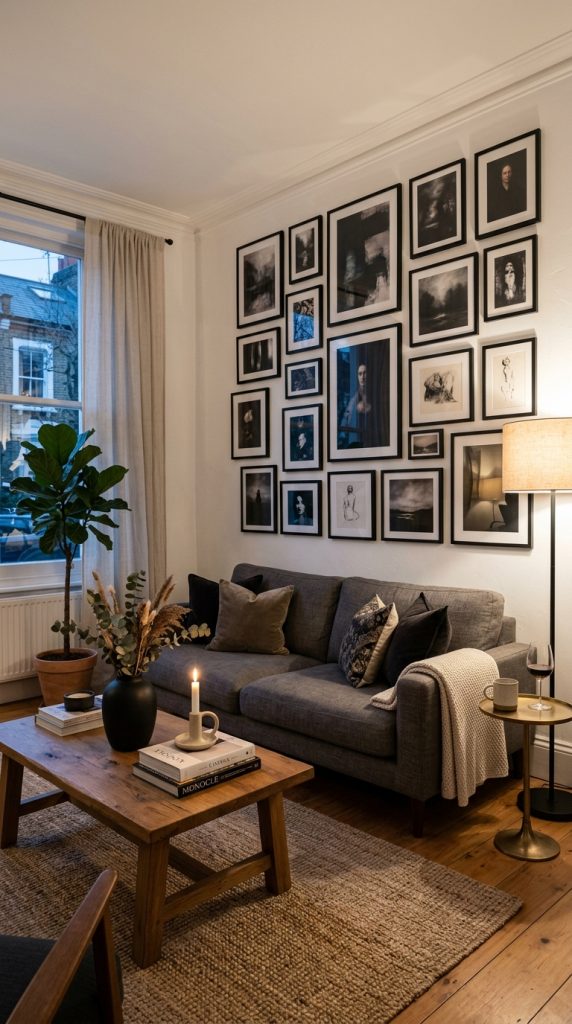
Transform a plain white wall into a dramatic focal point using a carefully arranged gallery wall featuring black frames and moody artwork. Choose botanical prints, landscapes, abstract paintings, or monochromatic photography that shares a consistent color palette. Arrange the frames evenly while leaving adequate spacing between each piece. Position a dark sofa beneath the gallery wall to strengthen visual balance throughout the room. Decorative lighting aimed toward the artwork adds additional depth during the evening while emphasizing the display’s details.
Idea 7: Industrial White-Wall Interior
Step-by-Step Guide
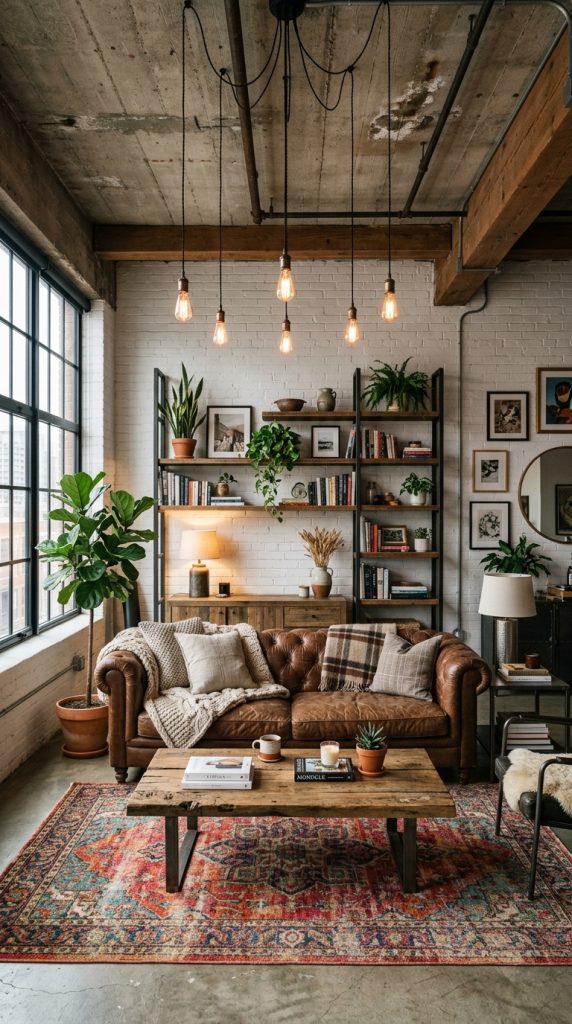
Combine white walls with industrial materials including black steel shelving, reclaimed wood furniture, concrete-inspired accessories, and leather seating. Select pendant lighting with warm bulbs that create an inviting atmosphere despite the raw architectural materials. Use woven rugs and knitted throws to soften the industrial textures while maintaining comfort. Decorative items should remain minimal and practical, allowing the furniture and materials to become the room’s primary visual features. The result is a balanced living room that feels modern, organized, and welcoming.
Idea 8: Olive Green and Neutral Layering
Setup Method
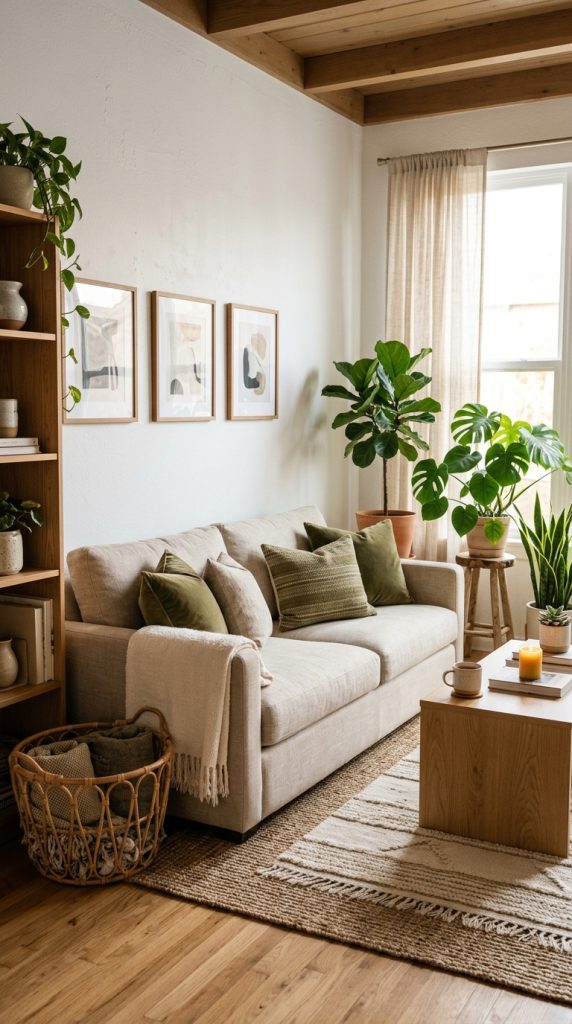
Introduce olive green through cushions, curtains, artwork, and indoor plants while keeping the white walls untouched. Pair these natural tones with beige upholstery, wooden furniture, and woven decorative baskets that create subtle visual depth. Layer textured rugs and linen throws to increase comfort without overwhelming the room. Ceramic accessories in soft neutral colors reinforce the organic atmosphere while preserving simplicity. This calming palette demonstrates how carefully coordinated colors can create a moody environment without dark architectural elements.
Idea 9: Cozy Reading Corner
How to Make
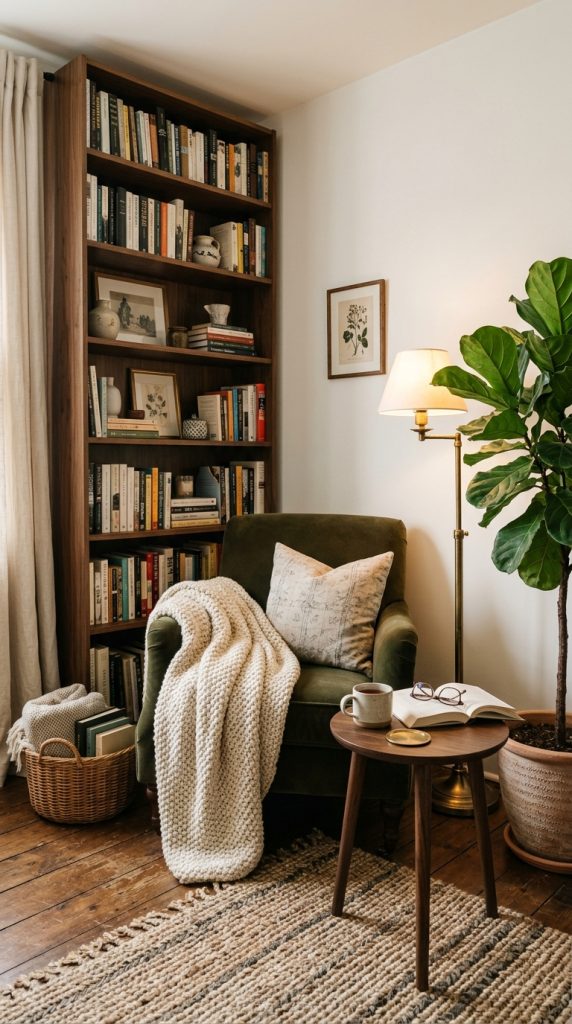
Dedicate one corner of the living room to a relaxing reading area using a comfortable dark armchair positioned against a white wall. Add a tall bookshelf, warm brass floor lamp, wooden side table, and textured blanket that encourage extended reading sessions. Floating shelves above the chair provide additional storage while displaying books and decorative ceramics. A small indoor plant introduces greenery that softens the contrast between dark furniture and white walls. This practical addition increases the room’s functionality while strengthening the overall moody aesthetic.
Idea 10: Layered Textures and Soft Lighting
How to Create
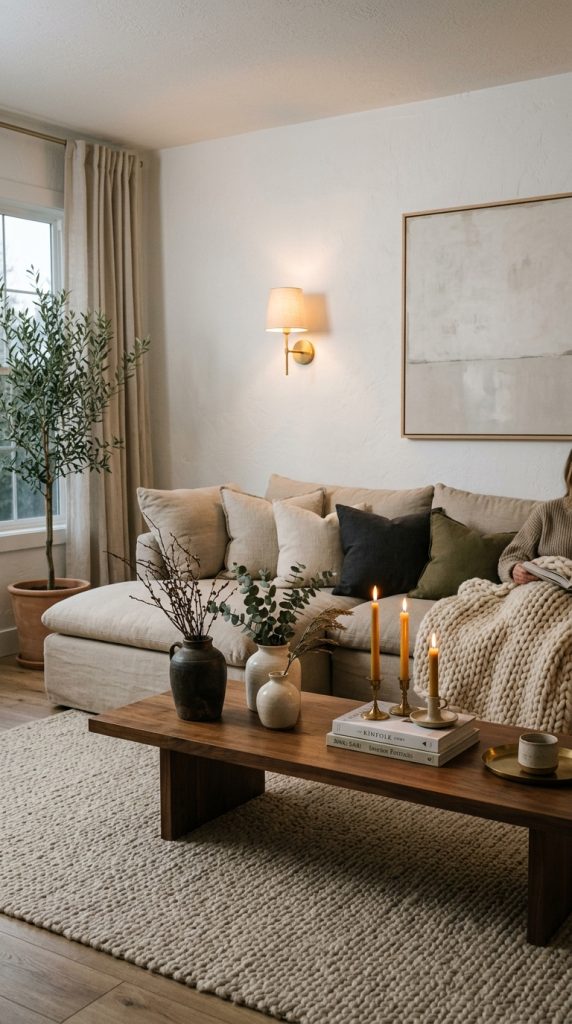
Focus on layering different materials instead of changing wall colors. Combine velvet cushions, linen curtains, wool blankets, woven baskets, ceramic decorations, wooden furniture, and textured rugs throughout the living room. Use multiple light sources including floor lamps, table lamps, candles, and wall sconces to establish comfortable evening illumination. Position mirrors opposite windows to reflect natural daylight and balance darker decorative elements. Thoughtfully layered textures create visual richness while the white walls preserve brightness, resulting in a sophisticated and welcoming living room.
Common Beginner Mistakes and How to Avoid Them
A frequent mistake is assuming that moody interiors require every decorative element to be dark. Excessive dark furniture combined with limited lighting can reduce the room’s comfort and visual balance. Instead, pair rich colors with white walls, lighter textiles, and warm wood finishes. Another mistake involves neglecting layered lighting, which often causes darker furnishings to appear flat during the evening. Decorative accessories should remain carefully organized rather than overcrowding shelves and tables. Maintaining a consistent palette across furniture, artwork, and textiles helps unify the room while preserving the intended atmosphere.
Practical Tips for Better Results
Begin by selecting one dominant accent color such as charcoal, brown, olive, or navy that complements your white walls. Repeat this color consistently throughout cushions, artwork, rugs, and decorative accessories. Layer multiple textures rather than adding excessive furniture. Position lighting at different heights using table lamps, floor lamps, and wall sconces to create depth throughout the room. Introduce indoor plants that soften stronger color contrasts while contributing natural freshness. Regularly declutter decorative surfaces to maintain an organized appearance that supports the room’s sophisticated style.
Styling, Presentation, and Organization Ideas
Arrange furniture around a clear focal point such as a fireplace, coffee table, or gallery wall to establish visual balance. Display books, ceramics, candles, and greenery in carefully grouped arrangements with intentional spacing between objects. Use woven baskets to organize blankets, magazines, and everyday items while complementing natural wood furniture. Layer rugs beneath seating areas to define conversation spaces within larger living rooms. Coordinated decorative accessories and consistent materials help create a polished Pinterest-inspired aesthetic while preserving practical organization.
Budget and Time Planning
Creating a moody living room with white walls can be completed gradually using affordable updates rather than expensive renovations. Begin by replacing textiles such as cushions, throws, and rugs before introducing new lighting or artwork. Repurpose existing wooden furniture whenever possible and update its appearance with coordinated accessories. Focus first on foundational design elements before investing in decorative details. This phased approach allows thoughtful planning while keeping the project within a realistic decorating budget.
Creative Expansion and Advanced Inspiration
Once the main living room is complete, introduce custom floating shelves, oversized artwork, decorative wall molding, layered curtains, or handcrafted accessories that reflect your personal design preferences. Experiment with textured fabrics, natural stone accents, or statement lighting while maintaining the room’s consistent palette. Refresh seasonal decor using greenery, candles, and textiles that coordinate with existing furniture instead of redesigning the entire space. These advanced ideas allow the room to evolve over time while preserving the elegant, cozy atmosphere that defines a moody living room with white walls.